


Turkmenistan has enacted a comprehensive law aimed at legalizing and strictly controlling the cryptocurrency industry, representing a significant shift in policy within one of the globe’s most reclusive economies.
A report from the local news outlet Business Turkmenistan noted that President Serdar Berdimuhamedov signed the law that will be implemented in 2026. This new legislation involves licensing, KYC (Know Your Customer), anti-money laundering (AML), and cold storage mandates for cryptocurrency exchanges and custodial services. Furthermore, it prohibits financial institutions from offering crypto services, allowing the state to revoke or invalidate token issuances.
The law mandates registration for cryptocurrency mining activities and prohibits unauthorized operations. It also authorizes the central bank to oversee or establish distributed frameworks, which might push citizens towards monitored digital infrastructures.
Notably, the law clarifies that cryptocurrencies are not recognized as legal tender, currency, or securities in Turkmenistan. Assets will be classified into backed and unbacked categories, with regulators tasked to establish conditions for liquidity, settlement, and emergency redemption for backed assets.
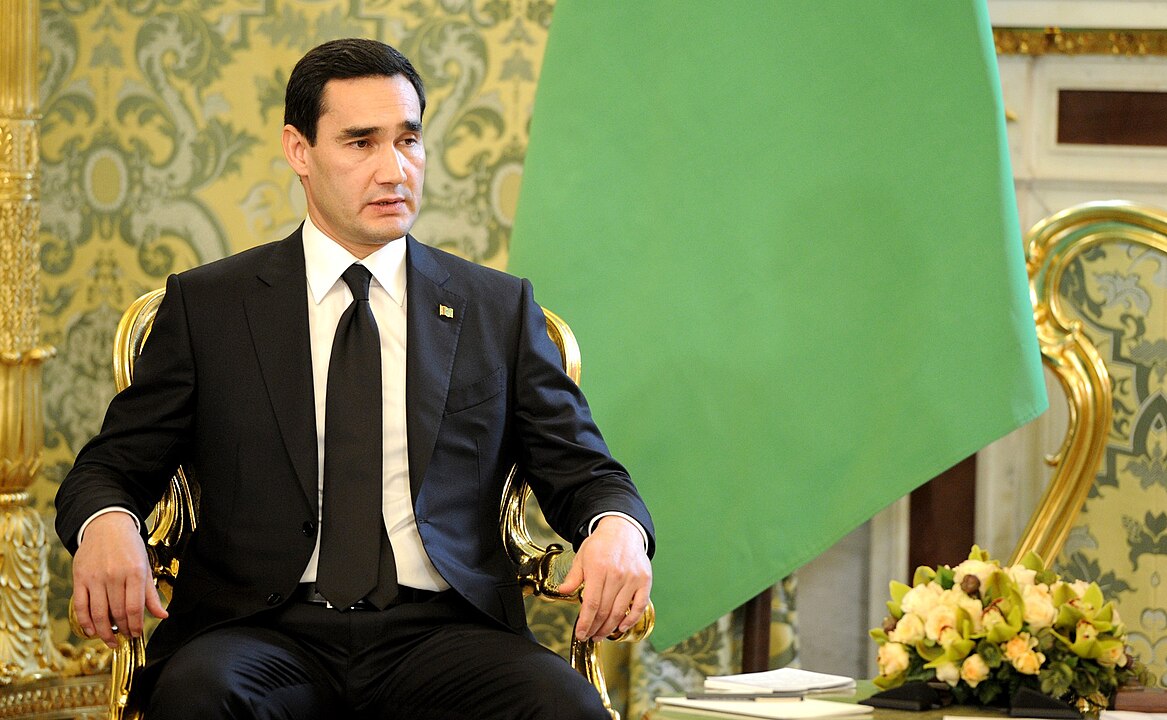 President of Turkmenistan Serdar Berdimuhamedov
. Source: Wikimedia
President of Turkmenistan Serdar Berdimuhamedov
President of Turkmenistan Serdar Berdimuhamedov. Source: Wikimedia
The initiative aligns with global trends as various governments seek to develop regulatory frameworks for cryptocurrencies and stablecoins. For instance, the UK’s tax authority just proposed a new tax system for decentralized finance (DeFi) assets.
In addition, Sarah Breeden, the Deputy Governor of the Bank of England, has indicated that the UK aims to match the United States on stablecoin regulations, anticipating that major jurisdictions will move concurrently as cryptocurrencies increasingly integrate into financial systems.
The former Soviet state is situated in Central Asia, has a population of roughly seven million, and its economy largely relies on natural gas. Its political climate is characterized by a highly centralized presidential regime recognized as one of the most oppressive worldwide, and it restricts social media platforms like X and Telegram.
The country is home to various notable landmarks, including a vast natural gas reserve and a crater known ominously as ’the door to hell,’ which burns continuously.
For more information, refer to how crypto regulations are changing worldwide in 2025.