


Bitcoin miners recently received some respite on Thursday as mining difficulty saw a reduction. However, forecasts indicate that this relief may be short-lived as an increase is expected in December.
The upcoming adjustment on December 11 is set to raise difficulty levels from 149.30 trillion to 149.80 trillion, as estimated by CoinWarz. The preceding adjustment had lowered the difficulty from 152.2 trillion, resulting in an average block time slightly under the targeted 10 minutes.
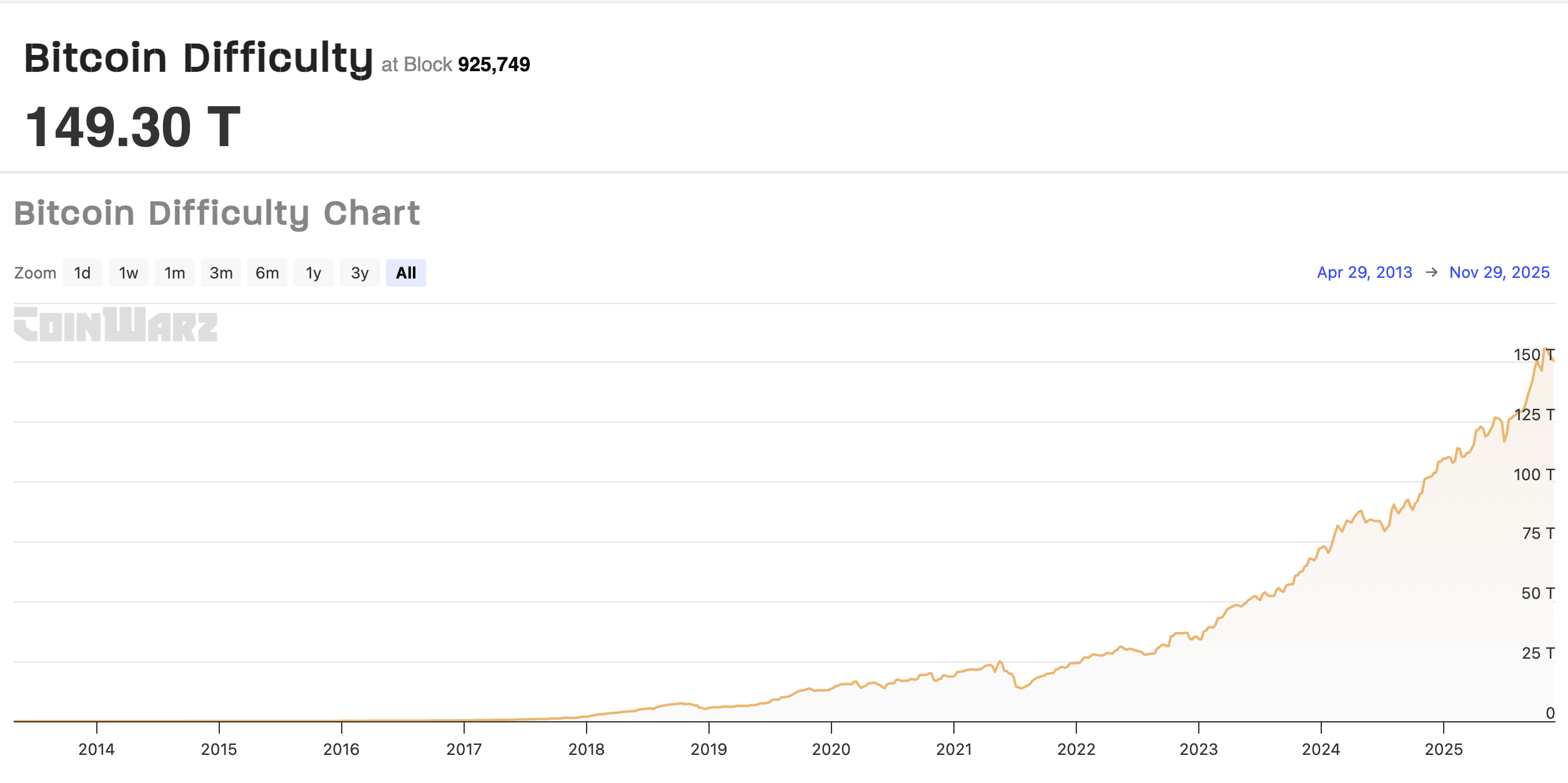 Bitcoin’s mining difficulty from 2014-2025. Source: CoinWarz
Currently, the hashprice is lingering at $38.3 petahashes per second (PH/s), having bounced back from a record low below $35 PH/s noted on November 21.
For context, a hashprice near $40 PH/s is critical for miners, prompting them to contemplate equipment deactivation or continued operations.
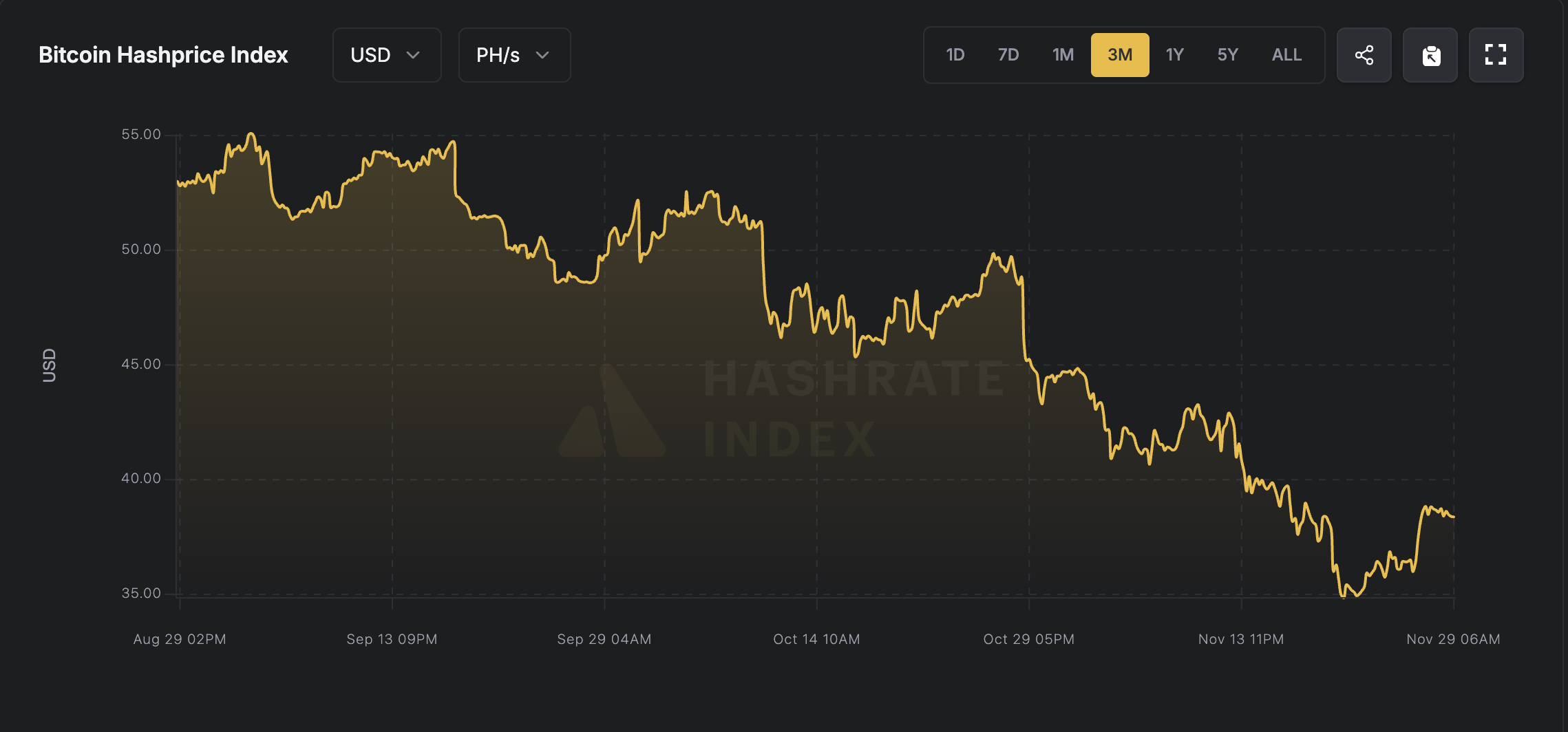 Bitcoin mining hashprice. Source: Hashrate Index
The mining sector is grappling with increasing regulatory pressures, mounting energy costs, and geopolitical strife between the US and China, which might impede the supply chain of essential equipment.
U.S. Investigates Major Crypto Mining Hardware Manufacturer
The Department of Homeland Security (DHS) is currently probing Bitmain, a leading manufacturer of cryptocurrency mining hardware based in China. This investigation aims to ascertain whether their machines can be accessed remotely for espionage.
In 2024, Senator Elizabeth Warren, a significant critic of cryptocurrency, posited that ASICs from Bitmain could pose spying risks to sensitive US military installations.
Bitmain dominates the production of application-specific integrated circuits (ASICs) used in proof-of-work mining, holding an 80% market share, according to research from the University of Cambridge. Any restrictions or sanctions by US authorities against Bitmain could potentially disrupt the mining industry, which relies heavily on their devices.
Related: Thirteen years post the first halving, Bitcoin mining has transformed significantly in 2025.