
Bitcoin Plummets to $84K: Is Japan's Bond Market to Blame or Are There Deeper Issues?
The decline of Bitcoin to $84,000 is primarily attributed to concerns surrounding US dollar stablecoins, a faltering global economic outlook, and other factors unrelated to Japan's bond market pressures.



Key Points:
- Concerns over stablecoins, regulatory pressures, and a decline in trader risk appetite affected Bitcoin more than issues in Japan’s bond market.
- Diminished confidence in global growth and pressures on digital asset reserves led to increased selling of BTC and subsequent stop losses.
Bitcoin’s price sharply fell on Sunday, struggling to surpass $92,000. The drop to $84,000 on Monday resulted in a loss of $388 million in bullish leveraged positions, prompting analysts to seek clarity on the situation. Multiple elements led to the sell-off, causing traders to adopt a more cautious approach.
Analysts quickly connected Bitcoin’s price decrease to disturbances in the Japanese bond market, where yields on 20-year notes reached a new peak in 25 years.
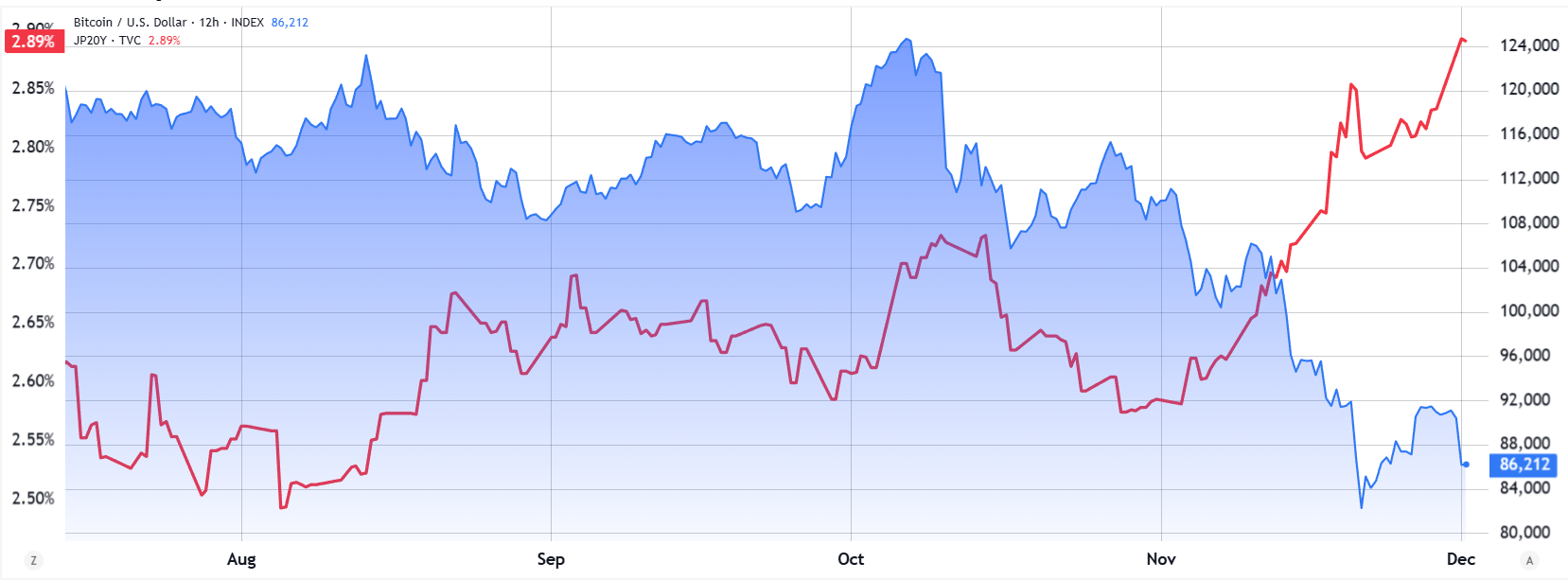 Japan 20-year bonds yield (left) vs. Bitcoin/USD (right). Source: TradingView / Cointelegraph
Higher yields typically indicate that investors are hesitant to purchase those bonds at current rates, spurred by fears over inflation or increasing government debt. Despite the timing, establishing a direct link is difficult, particularly as the 30-day correlation has fluctuated year-round.
The stress in Japan’s market may mirror worsening global economic forecasts. Jim Chanos, renowned for forecasting the fall of Enron during the dot-com bubble, recently pointed out in a Yahoo Finance interview the climbing risks associated with GPU-backed debt involving cloud AI companies.
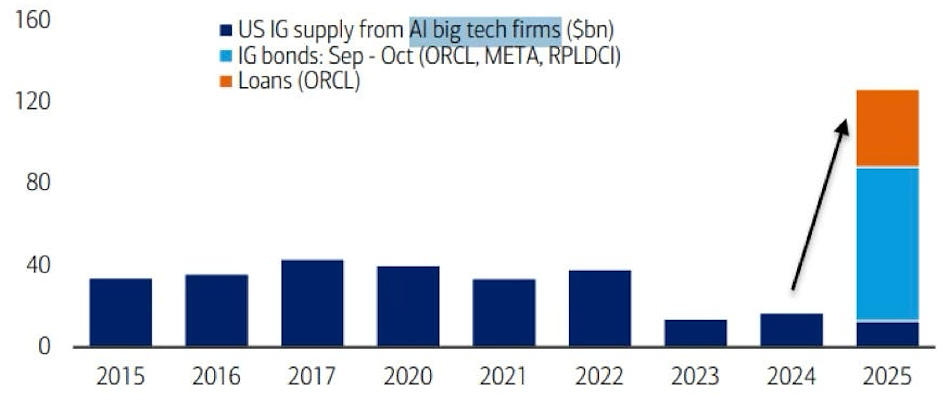 AI datacenter funding, USD billion. Source: Bofa Global Research
According to Chanos, “a lot of the AI companies […] are just loss-making enterprises right now,” adding that if changes are not made, “there is going to be debt defaults.” This funding model, utilizing GPUs as collateral, saw initial use from CoreWeave and also aligns with Nvidia’s substantial investments in the cloud domain.
These firms leverage their Nvidia chips as collateral, akin to how mortgages employ houses; therefore, should revenues stoop and hardware values decline, the entire debt structure faces heightened default risks.
Related: Does GENIUS turn stablecoin issuers into stealth buyers of US debt?
Regulatory Ambiguity Increases Crypto Market Anxiety
Another area of concern stems from the regulatory landscape, which, while not directly impacting Bitcoin, does contribute to overall investor hesitance. As traders perceive a stricter government approach towards cryptocurrency, many become reluctant to enhance their investments. This sentiment can morph into negativity, even without immediate repercussions for Bitcoin.
Reuters disclosed on Saturday that China’s central bank reaffirmed its staunch position against digital assets, committing to escalate its crackdown on unlawful activities. Reports have indicated that the People’s Bank of China asserted that stablecoins are being utilized for illicit activities, including money laundering, fraud, and unauthorized cross-border transactions.
Over the past 30 days, Bitcoin has experienced a 23% price drop, disturbing the operations of strategic digital-asset reserve firms. Previously, these entities had strong motivations to issue stocks at market rates and utilize those proceeds for Bitcoin purchases; however, this strategy falters when the company’s trading dips below its net asset value.
Strategy’s CEO, Phong Le, disclosed in an interview that the firm would only contemplate selling Bitcoin if its net asset value remained low, and all other funding avenues had been exhausted. Despite widespread anxiety over the weekend, Strategy announced it successfully raised $1.44 billion in cash on Monday to ensure dividend disbursements and settle its debt obligations.

Simultaneously, S&P Global Ratings downgraded Tether’s (USDT) reserves to the lowest possible rating on Wednesday. Subsequently, USDT began trading at a 0.4% discount compared to the official USD/CNY rate in China, indicating moderately heightened selling pressure.
Analysts have remarked on “persistent disclosure gaps” and “limited insights into the reliability of custodians, counterparties, or bank account providers.” Regardless of whether the critiques hold full merit, given that Tether does not function akin to a conventional bank, the move still dampens cryptocurrency traders’ risk tolerance.
Bitcoin’s decline to $84,000 reflects broader anxieties related to the stablecoin sector and waning confidence in global economic perspectives, rather than a specific problem within Japan’s bond market.