
Poland's Legislative Attempt on Crypto Regulation Fails After Presidential Veto
The Polish government faces setbacks in crypto regulation as its proposed law does not overcome a presidential veto.


Poland’s parliament has confirmed the presidential veto on the Crypto-Asset Market Act, which has hindered the country’s efforts to regulate its digital-asset sector, a regulation that many believe is becoming increasingly necessary.
The lower chamber of the Parliament could not achieve the three-fifths majority needed to counter President Karol Nawrocki’s veto, which was placed on the act proposed by the government of Prime Minister Donald Tusk. The bill sought to align Poland with the European Union’s MiCA framework for crypto markets but fell short after the president blocked it, citing concerns over the potential for infringement on citizens’ rights and state stability.
Nawrocki’s rejection last week has caused the legislation to stall, reinforcing the need for a fresh approach towards crypto legislation in the country.
The proposal has sparked significant debate within the Parliament and the crypto community, with supporters viewing it as critical for national security and detractors cautioning that it imposes excessive regulations that could drive innovation and startups away from Poland.
Growing Crypto Usage Despite Regulatory Setbacks
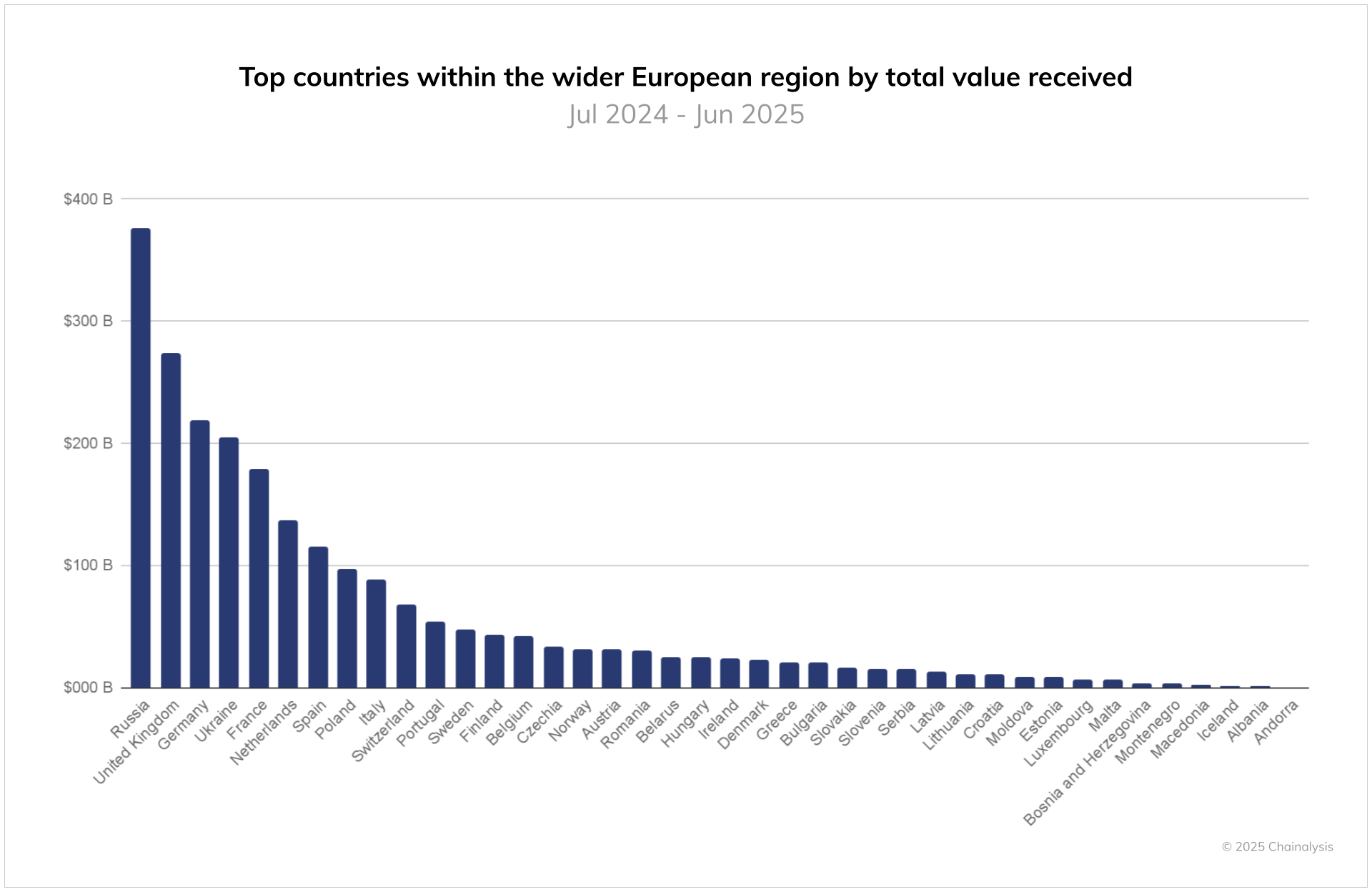
Despite the legislative hurdles, cryptocurrency adoption in Poland is progressing. Chainalysis highlighted Poland’s emergence as a major player in Europe’s crypto sector, noting a substantial increase in onchain activity and over 50% growth in total transaction volume over the past year.
Moreover, Polish investors are reportedly increasing their Bitcoin investments, as reflected by the rise in Bitcoin ATM installations throughout the country.
 Bitcoin adoption in Poland
Poland ranked eighth in Europe in crypto value received from July 2024 to June 2025.
Bitcoin adoption in Poland
Poland ranked eighth in Europe in crypto value received from July 2024 to June 2025.