
Bitcoin Miners Embrace Renewable Energy Amid Profit Declines
With mining profitability dwindling, Bitcoin miners are increasingly turning to renewable energy sources to maintain their operations.
Bitcoin mining companies are shifting their focus toward renewable energy sources to lower expenses due to the historically low hash price—a vital indicator that reflects miner profitability, which is currently below the $40 threshold needed for operators to break even.
As of this writing, the hash price stands at approximately $39.4 per petahash per second daily (PH/s/day), according to the mining data provider Hashrate Index.
Sangha Renewables, a Bitcoin miner and renewable energy firm, inaugurated a 20 megawatt solar mining facility in Ector County, Texas, as reported by TheMinerMag.
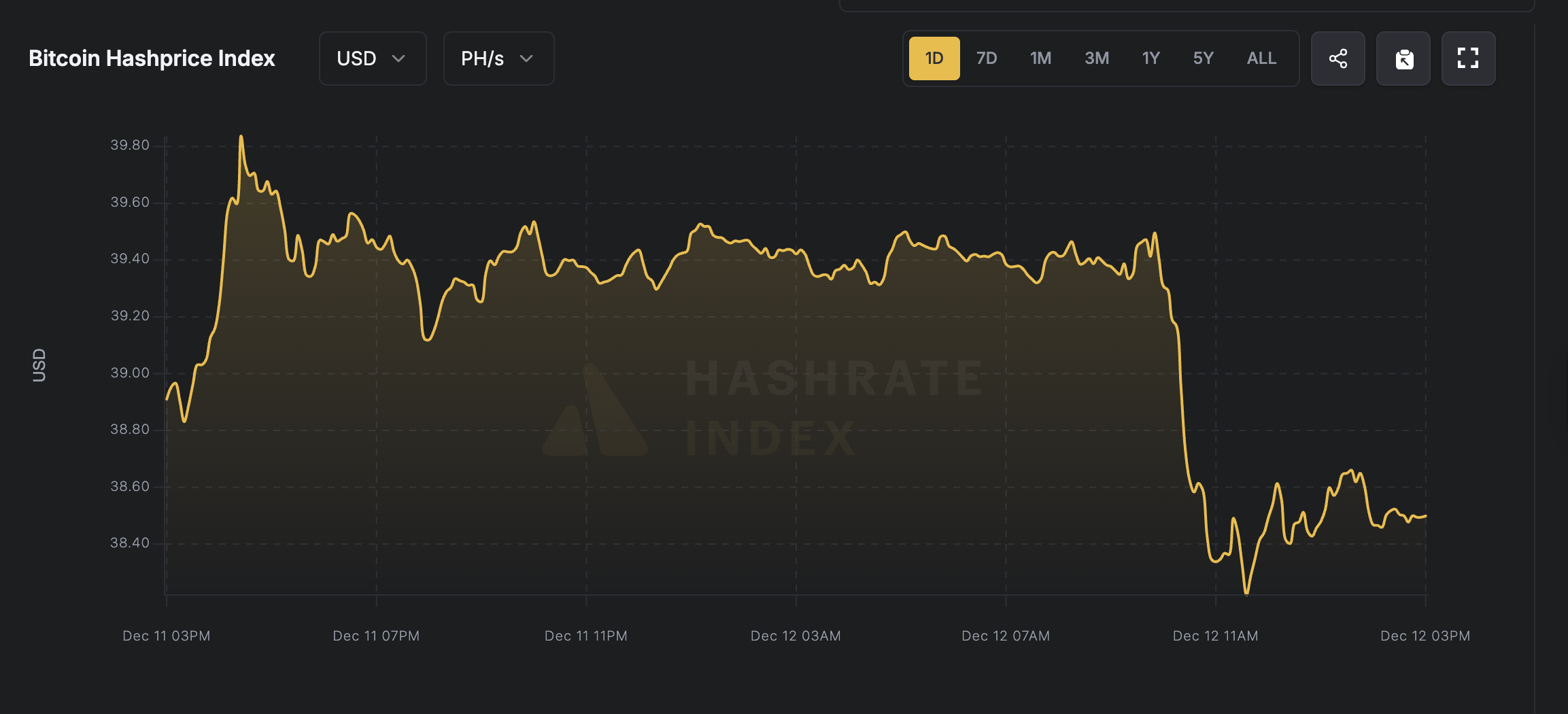 Miner hash price continues to decline. Source: Hashrate Index
The Phoenix Group, engaged in mining and digital infrastructure, announced in November the initiation of a 30-megawatt hydropower mining operation in Ethiopia here.
Meanwhile, in September, Canaan—a hardware manufacturer and Bitcoin miner—collaborated with Soluna to set up a mining facility at a wind-powered site in Briscoe County, Texas. Canaan is also working on creating an adaptive mining rig designed to optimize energy usage through balancing electrical loads and utilizing AI technology.
The Bitcoin mining sector is confronting significant economic issues, including diminishing mining rewards, which have put industry players in the most challenging profit margin environment ever recorded in the sector’s history.
Mining Bitcoin Becomes Increasingly Costly
The mining hashrate of the Bitcoin network—a measure of the total computing power devoted to securing the protocol—continues to achieve record highs.
Despite short-term fluctuations, the long-term trend remains positive, with the network’s hashrate recently surpassing the 1 zetahash milestone as of April.
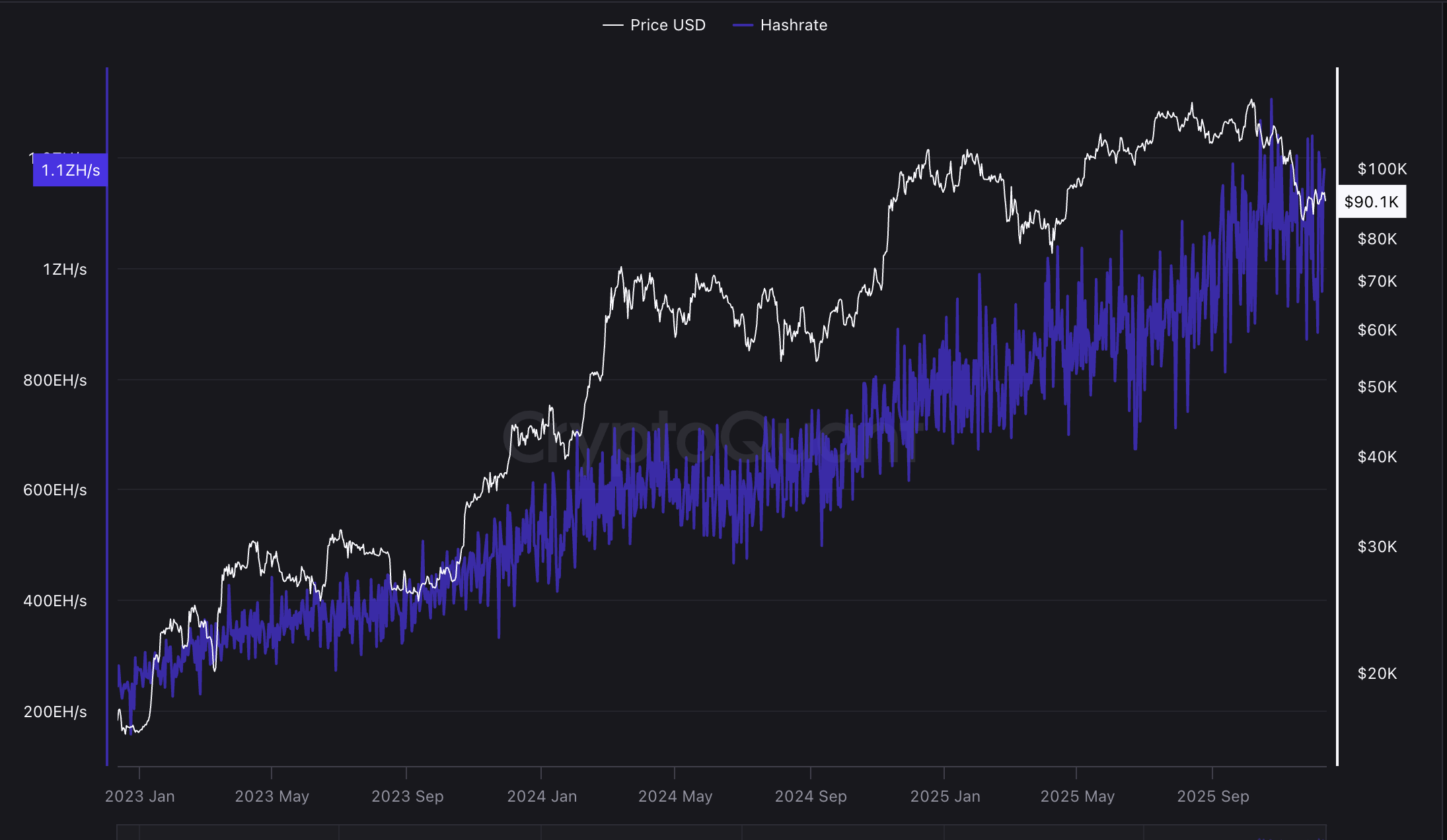 Bitcoin network hashrate. Source: CryptoQuant
One zetahash is equivalent to 1,000 petahashes. As the hashrate rises, miners must allocate increasingly substantial computational resources to remain competitive in the quest to mine blocks.
In November, Tether, a stablecoin issuer, indicated it would cease its Bitcoin mining operations in Uruguay due to escalating energy costs.
Related articles can be found here.