
A recent report from the US Federal Reserve reveals that the dynamics of the US dollar in global bond markets exhibit cyclical movement, rather than a steady trend in dollar dominance or de-dollarization. This analysis utilizes the Bank for International Settlements’ (BIS) database of international debt securities, identifying three notable waves of dollarization since the 1960s.
“We find no monotonic dollarization or de-dollarization trend; instead, the dollar’s share exhibits a wavelike pattern,” the paper states.
The latest wave coincided with the 2008 global financial crisis when the dollar reclaimed significant market share in international bond issuance, moving closer to levels seen prior to the early 2000s surge in euro-denominated bonds.
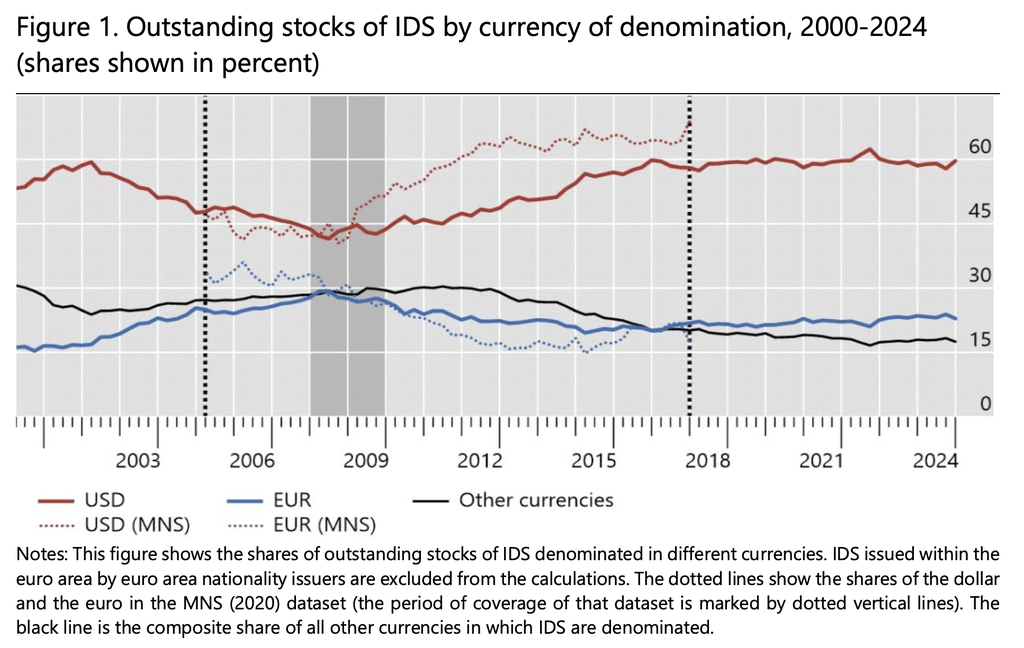 Share of international debt issued by currency, 2000–2024. Source: Federal Reserve
The study highlights that as of 2024, emerging market issuers primarily depend on dollar-denominated debt, which makes up around 80% of their total international bonds, while China’s attempts to globalize its currency, the renminbi, started in 2010, achieve limited success.
“While the dollar’s eminence rests on vulnerable foundations, the absence of viable alternatives has left the dollar’s primacy unchallenged,” the report concludes.
Stablecoins Supporting US Treasurys
The stablecoin sector saw substantial growth last year, inflating from approximately $205.5 billion in December 2024 to about $309.6 billion currently, primarily within US dollar-linked tokens, where Tether’s USDt and Circle’s USDC represent around 85% of the total stablecoin market.
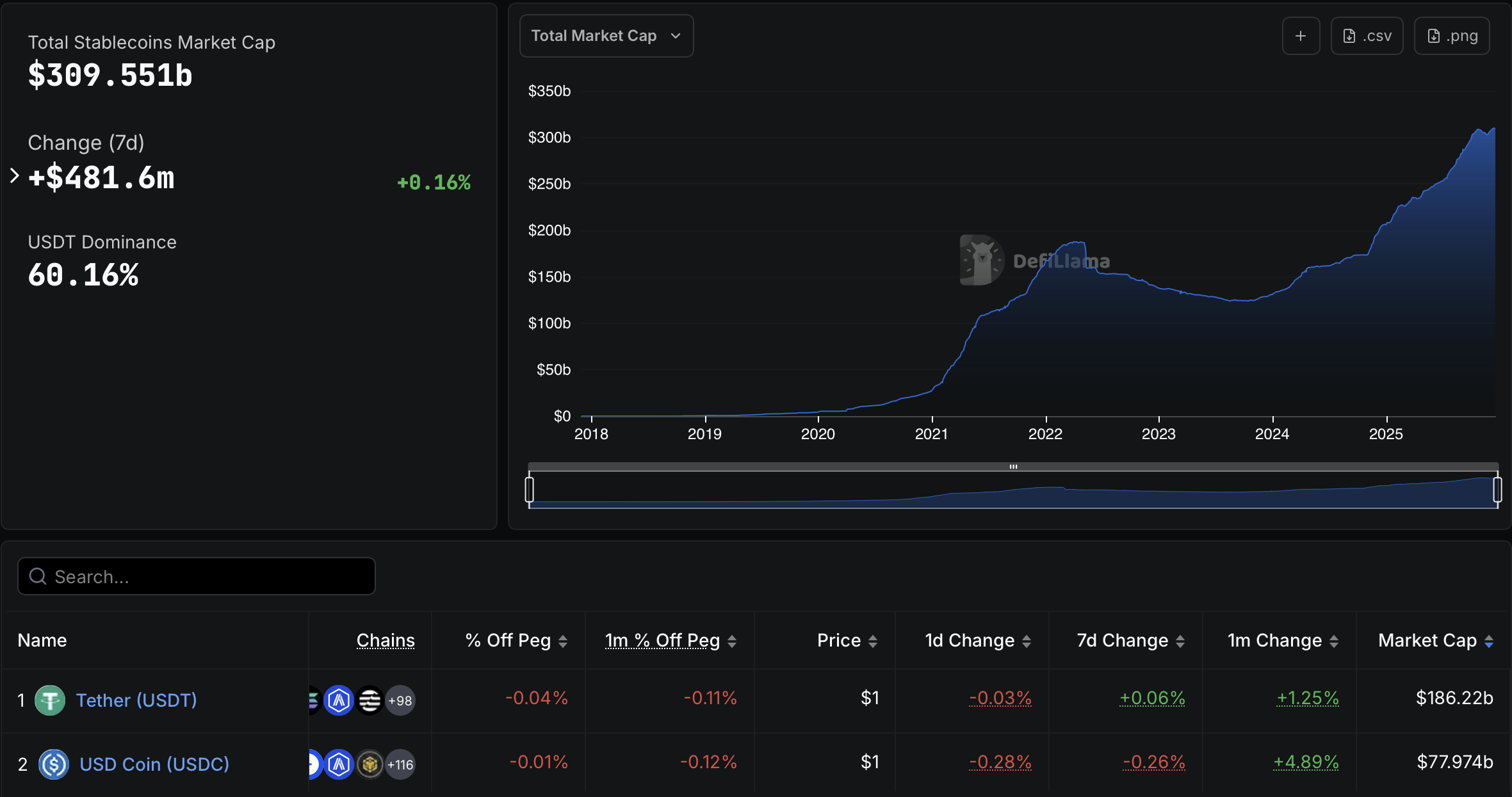 Stablecoin market cap. Source: DefiLlama
As the stablecoin market expands, these issuers have begun to hold significant amounts of short-term US government debt. Tether recently reported over $127 billion in US Treasurys, positioning it among the largest holders of US sovereign debt.
Circle also reflects a similar trend, showcasing that USDC is primarily backed by governmental debt instruments, showcasing $49.7 billion in reverse Treasury repos and approximately $18.5 billion in short-term Treasurys.
 Circle’s reserves composition. Dec. 15, 2025. Source: Circle
The US government perceives dollar-pegged stablecoins as a mechanism to bolster the dollar’s position as a global reserve currency, promoting their growth through legislative initiatives, a factor that is making other nations cautious. For instance, Italy’s Finance Minister Giancarlo Giorgetti expressed concerns that US policies supporting these stablecoins might pose significant risks to Europe’s financial system.
In December, a consortium of ten European banks announced plans to introduce a euro-pegged stablecoin in late 2026.