Proposed Tax Exemption for Minor Stablecoin Transactions and Staking Earnings
US lawmakers are working on a proposal that would exempt small stablecoin payments from taxation and defer taxes on staking and mining rewards.



US legislators have unveiled a draft aiming to reduce the tax burden on average crypto users by eliminating capital gains tax for small stablecoin transactions and providing a new deferral for staking and mining rewards.
The initiative, led by Representatives Max Miller from Ohio and Steven Horsford from Nevada, seeks to amend the Internal Revenue Code to better accommodate the increasing utilization of digital assets in daily transactions. The objective of the draft is to “remove low-value gain recognition that stems from everyday consumer transactions using regulated payment stablecoins.”
According to the proposal, individuals would not need to declare gains or losses on stablecoin transactions valued up to $200, given that the asset is backed by a permitted issuer under the GENIUS Act, is pegged to the US dollar, and maintains a stable trading price around $1.
The measure includes provisions to prevent misuse. The exemption will not apply if a stablecoin fluctuates outside a specified price range, and the benefits will not extend to brokers or dealers. Additionally, the Treasury would be empowered to impose anti-abuse regulations and reporting protocols.
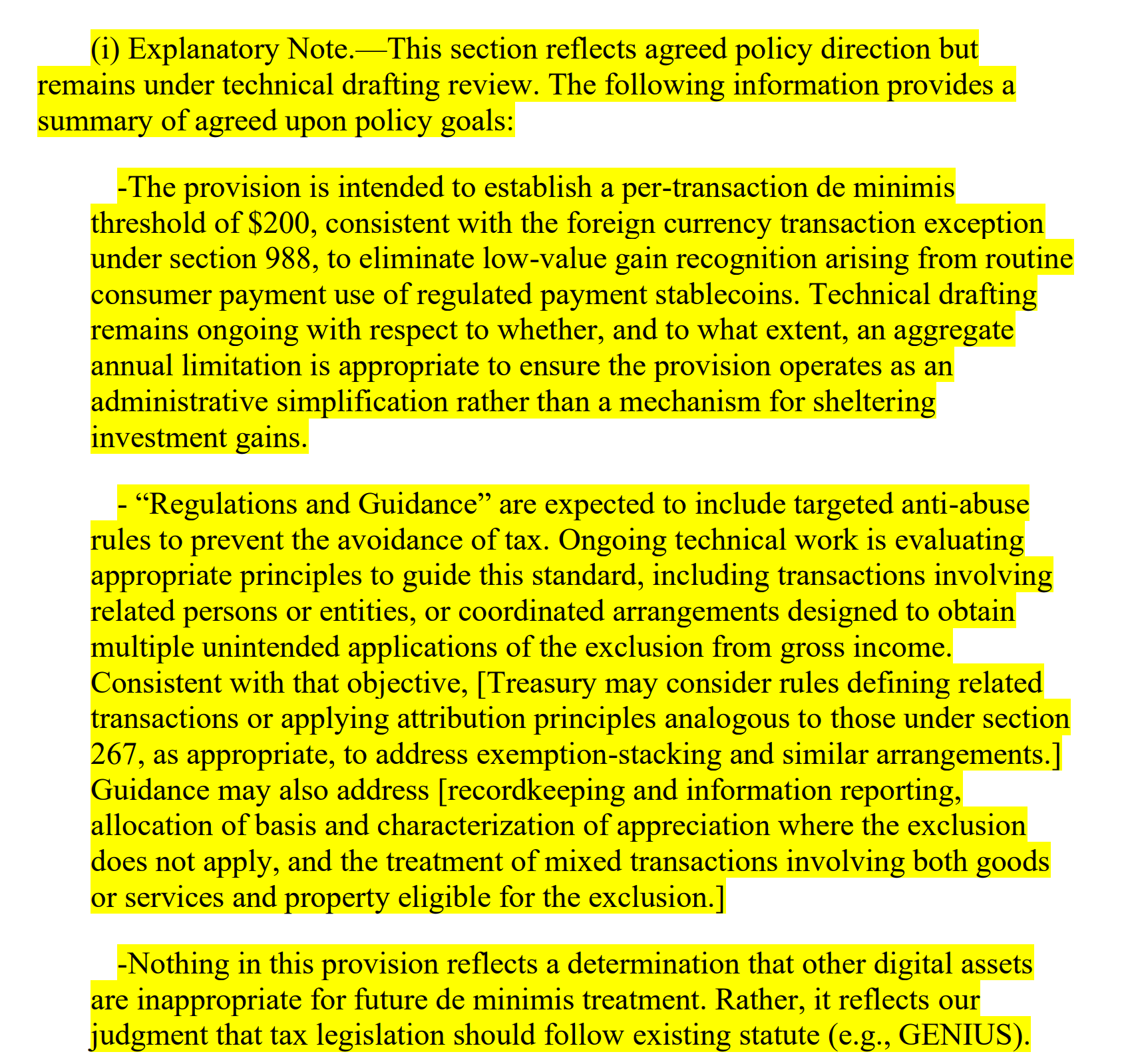 Draft bill explains the reasoning behind tax breaks. Source: House
Related: Crypto Biz: Bank stablecoins get a rulebook; Bitcoin gets a land grab
Tax Reduction on Crypto Staking Rewards
In addition to payment transactions, the draft also tackles persistent issues regarding “phantom income” from staking and mining activities. Taxpayers would have the option to defer recognizing income from staking or mining rewards for as long as five years, instead of facing immediate taxation upon receipt.
“This provision reflects a necessary compromise between immediate taxation upon dominion & control and full deferral until disposition,” states the draft.
Further, the proposal extends the current tax treatment for securities lending to specific arrangements for digital asset lending, adjusts wash sale regulations for actively traded crypto assets, and allows traders and dealers to choose mark-to-market accounting for digital assets.
Related: Galaxy predicts stablecoins will overtake ACH transaction volume in 2026
Call to Rethink Stablecoin Rewards Ban
Recently, the Blockchain Association sent a letter to the US Senate Banking Committee, with signatures from over 125 crypto firms and industry organizations, opposing the extension of restrictions on stablecoin rewards to third-party platforms.
The association contended that widening the limits set by the GENIUS Act beyond the issuers of stablecoins would hinder innovation and boost market concentration, favoring larger established entities. Their correspondence likened crypto rewards to incentives typically provided by banks and credit card companies, cautioning that prohibiting similar offerings for stablecoins would harm competitive fairness.