
South Korean payments processor BC Card has concluded a pilot project that allowed international users to pay local merchants using stablecoins.
BC Card’s pilot, announced on Tuesday, was carried out in collaboration with blockchain firm Wavebridge, wallet provider Aaron Group, and remittance service Global Money Express. Participants were able to convert stablecoins from overseas wallets affiliated with BC Card into digital prepaid cards.
The company emphasized that this pilot is part of a broader effort to implement a stablecoin payment framework as South Korean regulations on stablecoins evolve.
As one of South Korea’s foremost payment firms, BC Card claims to handle over 20% of the country’s card transactions, supporting 3.4 million local merchants. KT Corp, a major telecommunications entity in the nation, is its primary shareholder.
Shehram Khattak, General Counsel at Trust Wallet, remarked:
Ultimately, banks will have to deal with legacy operations but not only from an operations perspective but also processes; the entire department will have to change how they function.
Translation: Ultimately, banks will have to deal with legacy operations but not only from an operations perspective but also processes; the entire department will have to change how they function.
South Korea Takes Stablecoins Seriously
In late July, it was reported by local media that credit card companies were racing to respond to challenges posed by stablecoins. Various credit firms have reportedly formed a joint task force as regulators explore the introduction of won-pegged stablecoins.
BC Card also developed an internal team to monitor trends in both domestic and global stablecoin markets. However, the formulation of local regulations on stablecoins has been slower than expected.
Earlier this month, the Financial Services Commission (FSC) of South Korea failed to deliver a draft proposal on stablecoin regulations by the expected deadline. The delay has been attributed to conflicts between FSC and the Bank of Korea (BOK), South Korea’s central bank.
A key point of contention seems to be BOK’s recommendation that banks must control at least 51% of any stablecoin issuer seeking regulatory clearance, while other regulators are advocating for a more diverse ecosystem.
Stablecoins Take on the World
Stablecoins are increasingly being recognized as a potential alternative to traditional payment methods like credit cards and bank wiring.
Adoption is gaining speed, notably with YouTube permitting its US content creators to receive earnings in the dollar-pegged PayPal USD (PYUSD).
Simultaneously, Visa introduced USD Coin (USDC) settlement services for select US financial institutions.
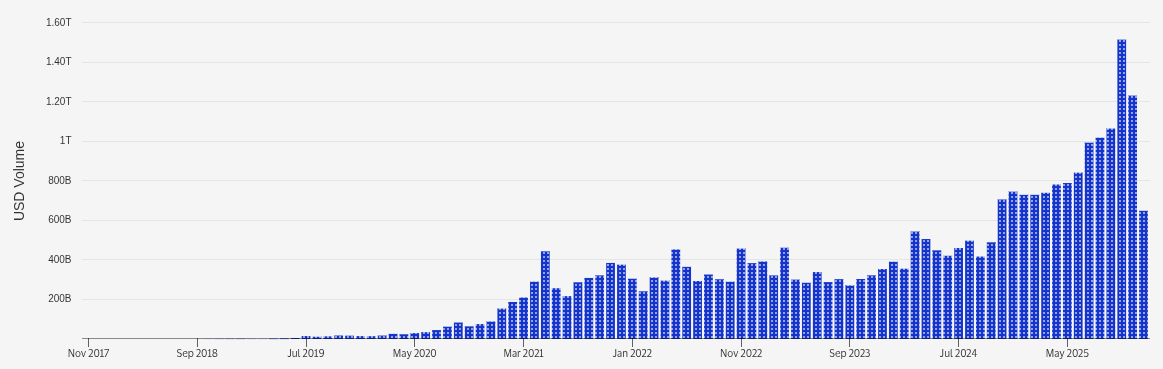 Stablecoin transaction volume. Source: VISA
Translation: Stablecoin transaction volume. Source: VISA