


A newly discovered vulnerability may allow malicious validators to skip the hash field during block postings, potentially causing crashes and delays in block production.
The issue impacts Babylon’s block signature system, known as the BLS vote extension, essential for confirming validator agreement on blocks.
According to a GitHub post published on Thursday, the flaw allows malicious actors to intentionally leave out the block hash field while sending their vote extension. This omission can cause consensus problems at epoch boundaries.
The block hash is critical for validating which blocks are actively being voted on, a piece of information that could be neglected due to this vulnerability.
Through this exploit, a malicious validator might crash others during crucial consensus checks, slowing down block production, especially if several validators are compromised.
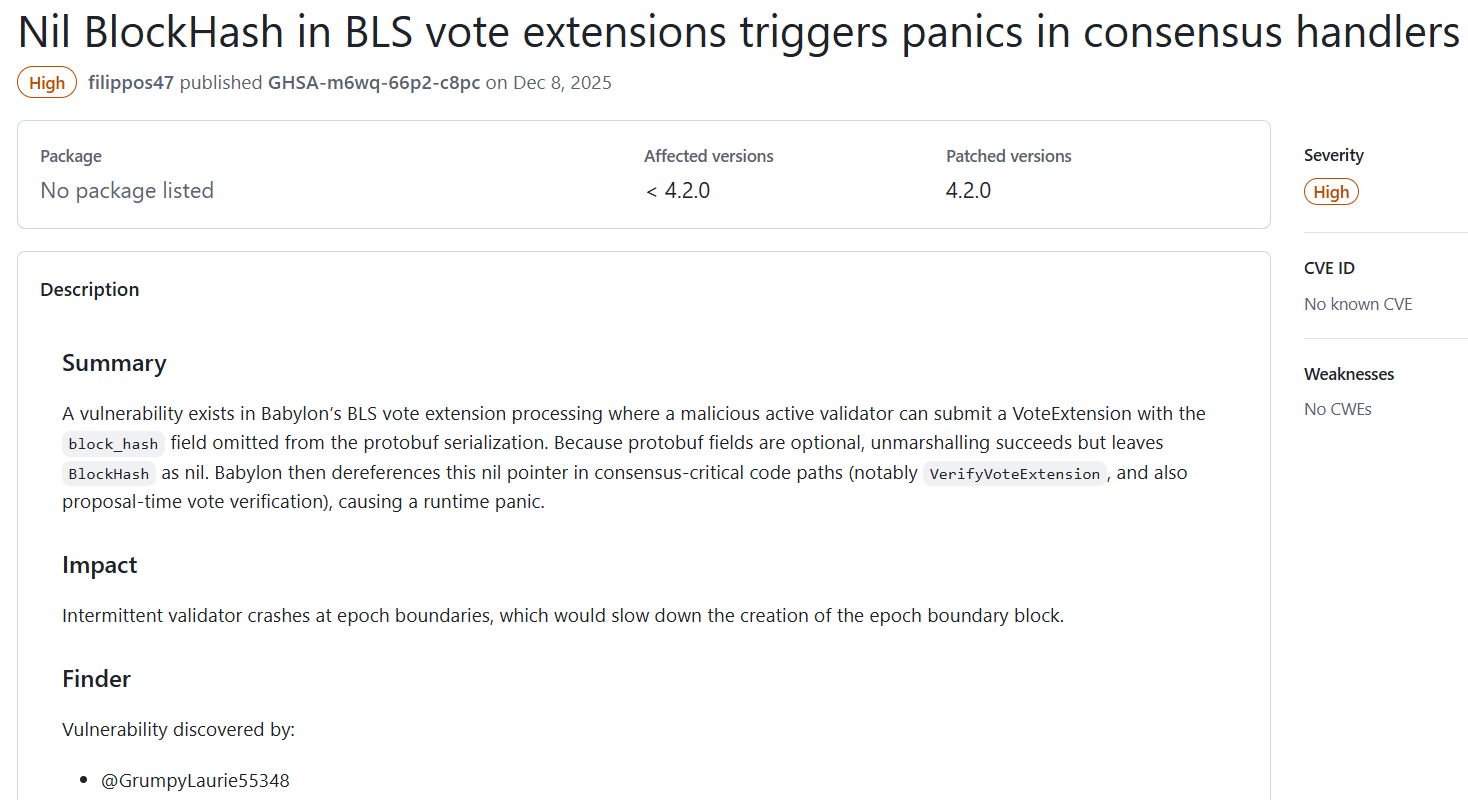 Babylon BLS vote extension bug. Source: github.com
Cointelegraph has attempted to contact Babylon for comments regarding the vulnerability’s potential consequences and remedial actions but did not receive a response before publication.
While the bug has not reportedly been actively exploited, developers alert that it poses a risk if left unaddressed.
Babylon Expands Bitcoin’s Yield Potential
Babylon is recognized as a pivotal initiative for Bitcoin’s decentralized finance (DeFi) ecosystem, enabling Bitcoin-native staking for the first time.
The emerging DeFi landscape for Bitcoin, referred to as BTCFi, represents a novel technological advance aimed at introducing DeFi functionalities to the original blockchain network.
On Wednesday, Babylon successfully secured $15 million in funding from a16z Crypto through the sale of BABY tokens, aiming to bolster the development of Bitcoin-specific DeFi frameworks.
Additionally, Babylon recently partnered with Aave Labs to facilitate Bitcoin-backed lending opportunities on Aave v4, allowing BTC to function as collateral without intermediaries. This product is expected to enter the testing phase by Q1 2026, with an official launch targeted for April 2026.