4 Million PI Tokens Traded in Just One Day: Is a Recovery on the Horizon for Pi Network?
Despite a recent drop in value, Pi Network's token may be gearing up for a rebound amidst speculation and market fluctuations.


The ongoing decline of Pi Network’s token has raised eyebrows among its community, leading to skepticism about the project’s future. Nevertheless, some indicators hint at a possible uptick in its price soon.
Exiting Exchanges
Recently, Pi’s token price fell to about $0.18, nearing last October’s record low of $0.17. There was a slight bounce back, but it remains down 9% over the week, having dropped a staggering 94% since its peak of $3 in February 2025.
This decline is not merely a localized issue; the wider cryptocurrency landscape has also been suffering, largely due to escalating geopolitical strife between the USA and the European Union, resulting from the Greenland situation.
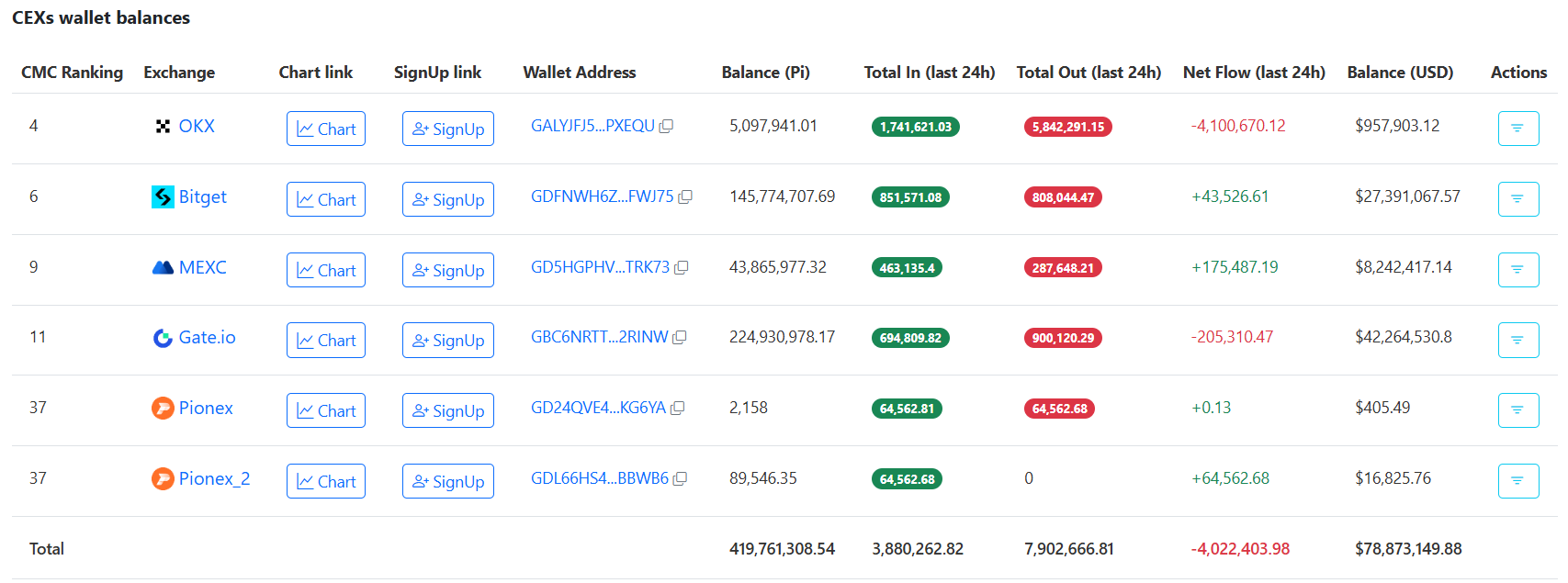
Nevertheless, Pi Network’s fortunes might not be entirely bleak. Over four million PI tokens were moved to self-custodied wallets in just the past day, alleviating some selling pressure.
Currently, the total PI held on exchanges stands at approximately 419.7 million, predominantly on Gate.io, followed by Bitget with 145.7 million.
PI Exchange Supply
PI Exchange Supply, Source: piscan.io
Will the Bears Prevail?
Despite having a vast and committed following, Pi Network faces increasing criticism over its persistent downturn and various operational challenges. A notable mention from a user on X, Pi Update, referred to it as “the longest-running crypto cope” due to incessant KYC processing delays, frozen assets, mandated lockups, and an absence of a genuinely accessible mainnet.
Critics have voiced concerns about the lack of listings on significant exchanges, questioning whether this phase signifies a late entry into the marketplace rather than an early opportunity. Another X user stated it’s “hard to stay optimistic” about PI recently, pointing out an inability to capitalize on the broader market recovery thus far this year, compounded by vague supply details, absence of a true mainnet, centralized authority, and restricted balances.