


Cryptocurrency is gradually shedding its reputation for illegitimacy, yet central bankers at the 2026 World Economic Forum in Davos have cautioned it poses a risk to monetary sovereignty.
While geopolitical tensions and the Greenland standoff created a tense backdrop at Davos, discussions about cryptocurrency proved to be a significant, albeit secondary topic.
US President Donald Trump dedicated a portion of his address to reaffirming his goal of making the US the leading global crypto hub and advocating for supportive legislation.
In contrast, during a panel discussion, Bank of France’s Governor François Villeroy de Galhau criticized the concept of private money and yield-bearing stablecoins while emphasizing the potential of central bank digital currencies (CBDCs).
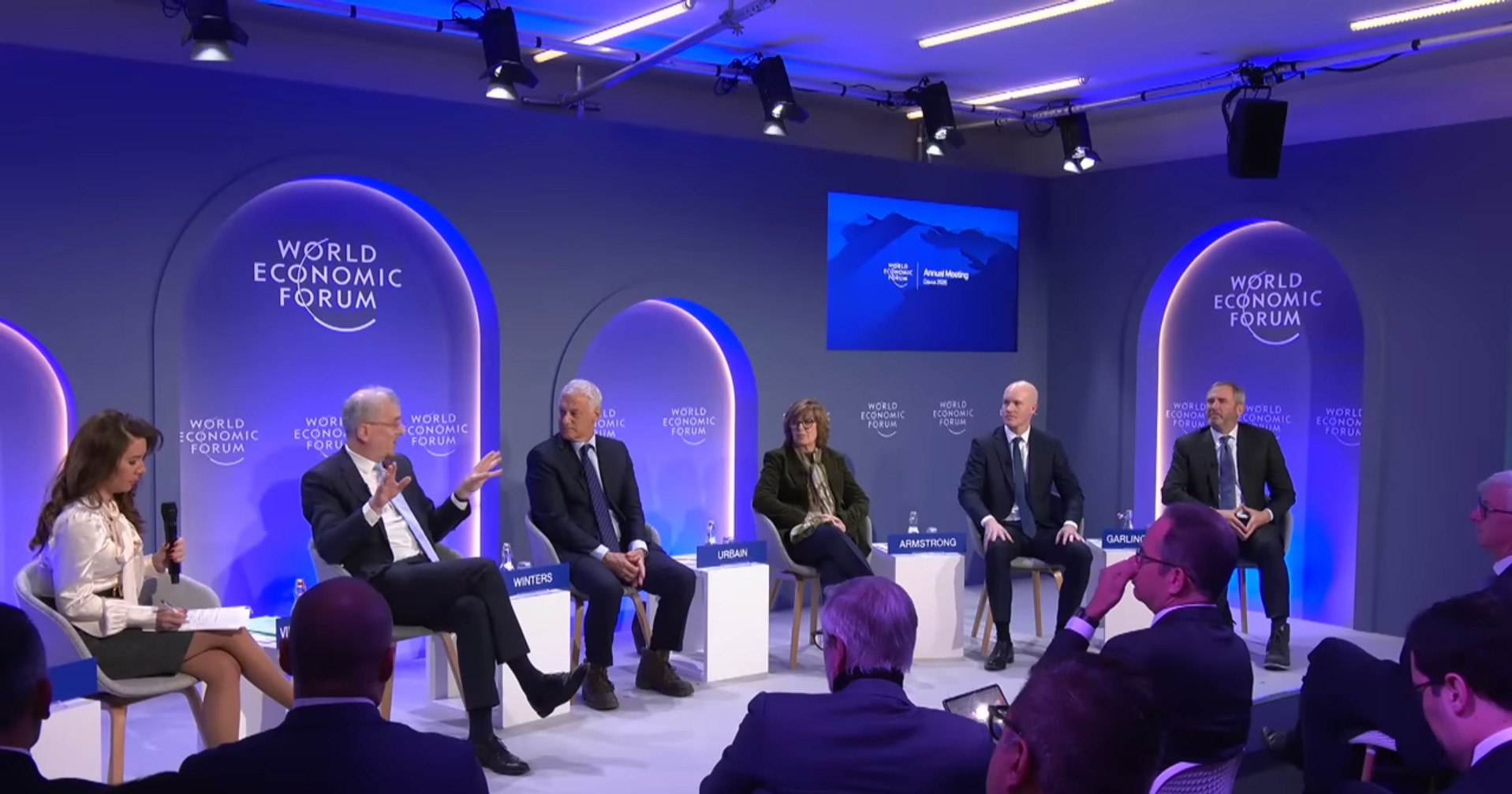 Crypto executives debated money sovereignty with France’s central bank governor at Davos 2026. Source: World Economic Forum
Disagreements were apparent, with US representatives framing cryptocurrency as an asset of geopolitical significance, while at least one prominent European central banker cautioned that private money jeopardizes financial stability and sovereignty.
Takeaways from Davos 2026
Trump Characterizes Crypto Regulation as a Geopolitical Contest
President Trump expressed his intention to push forward a crypto market structure bill, known as the CLARITY Act, during his speech at the forum. Although it faced delays due to opposition from major players like Coinbase, Trump is treating crypto regulation as a significant geopolitical priority.
He emphasized that it is essential for the US not to let China dominate the crypto space, insisting that if they do, regaining control will be virtually impossible.
Trump referenced the importance of the pending legislation linked to his recent signing of the GENIUS Act, framing it as a strategic necessity for the United States.
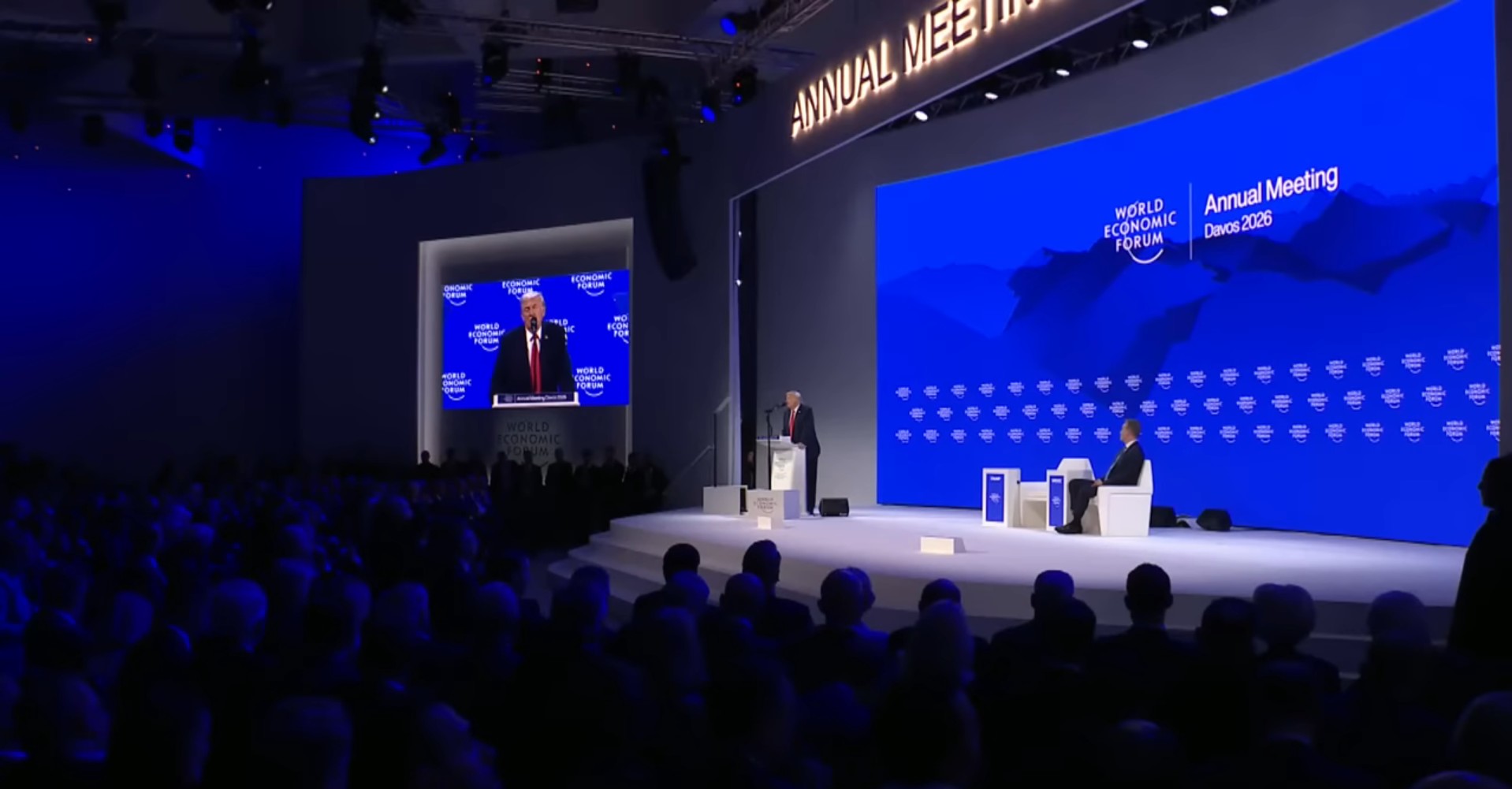 Trump’s soliloquy took up most of his time on stage, even though he was scheduled for a fireside chat with WEF CEO Børge Brende. Source: World Economic Forum
The White House aims for the US to emerge as the world’s cryptocurrency leader and sees regulatory frameworks as vital competitive tools. With the bill still pending in Congress, Trump expressed confidence that it would pass in due time.
Coinbase CEO and French Central Banker at Odds Over Monetary Control
A key moment at Davos occurred when Governor François Villeroy de Galhau offered a pushback against cryptocurrencies, recognizing tokenization’s relevance while expressing concerns about its implications for monetary sovereignty.
Villeroy noted that while tokenization could revolutionize financial infrastructure, monetary control is fundamentally tied to national sovereignty.
Coinbase’s Brian Armstrong countered, promoting Bitcoin as a contemporary alternative to the gold standard and as a safeguard against fiscal irresponsibility.
Villeroy, however, firmly rebutted that relinquishing monetary control to private entities would compromise democratic functions.
Regulatory Conversations Emerge
Discussions around Binance involved Co-CEO Richard Teng, who hinted at a potential return to the US market, while Ripple’s Brad Garlinghouse expressed a strong belief in Binance’s inevitable re-entry into this key marketplace. Coordination with government entities regarding state asset tokenization was paramount in discussions among crypto executives at the forefront.
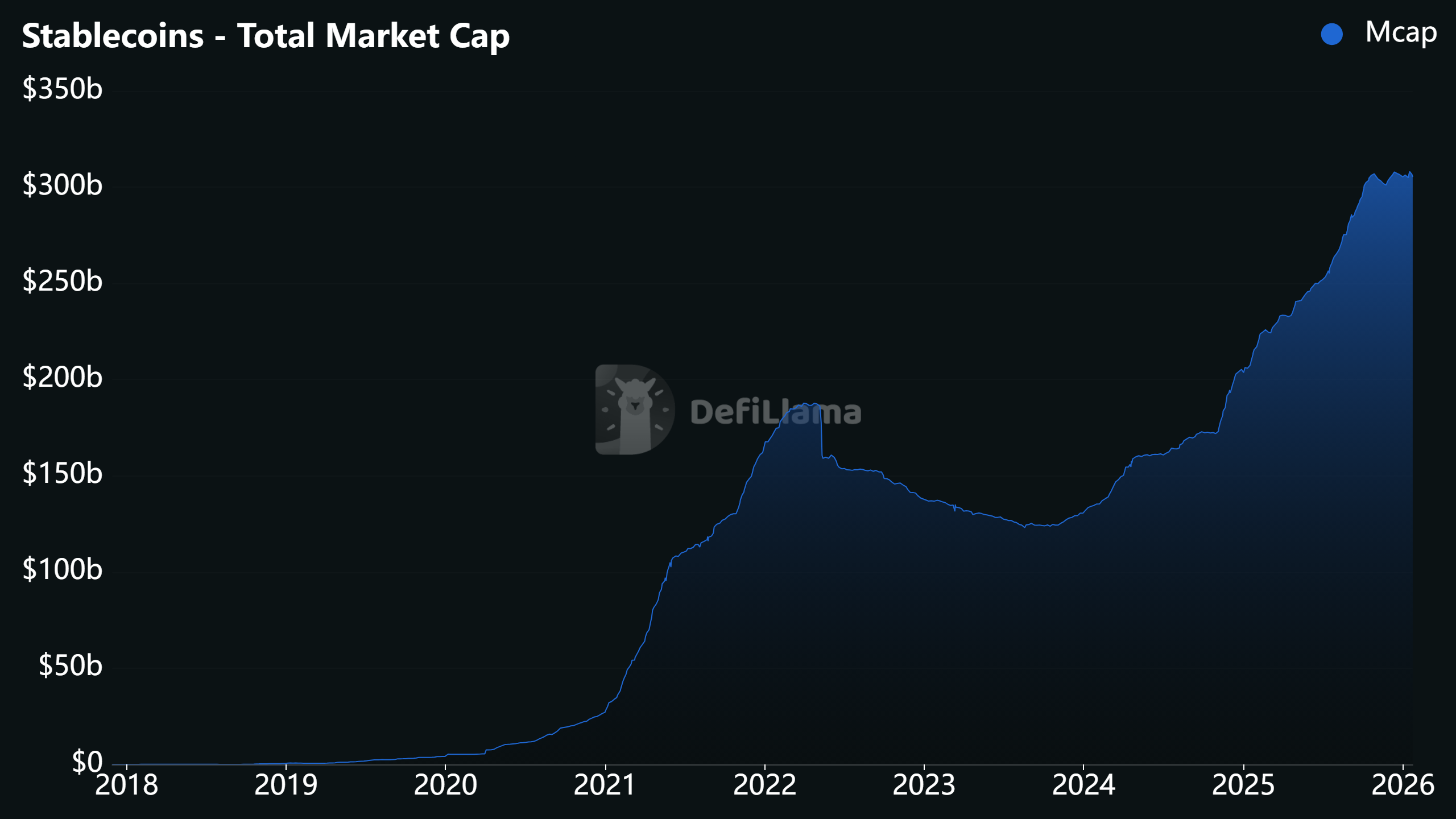 Stablecoins have an estimated market capitalization of over $300 billion. Source: DefiLlama
In the realm of cryptocurrency and stablecoins, the Davos forum reinforced their significance in the ongoing narrative of financial policy, demonstrating an ongoing divide between the US and European regulatory initiatives.