



Stablecoins are becoming increasingly prevalent in Africa, functioning as a faster and more cost-effective method for remittances. Vera Songwe, a former UN under-secretary-general, emphasized that remittances are now recognized as more vital than traditional aid in Africa.
During a discussion at the World Economic Forum in Davos, Switzerland, Songwe articulated that conventional money transfer services often impose fees nearing $6 for sending $100, rendering them both expensive and sluggish. In contrast, stablecoins significantly reduce these costs and expedite transaction times, enabling users to transfer funds within minutes instead of waiting several days for international payments to be processed.
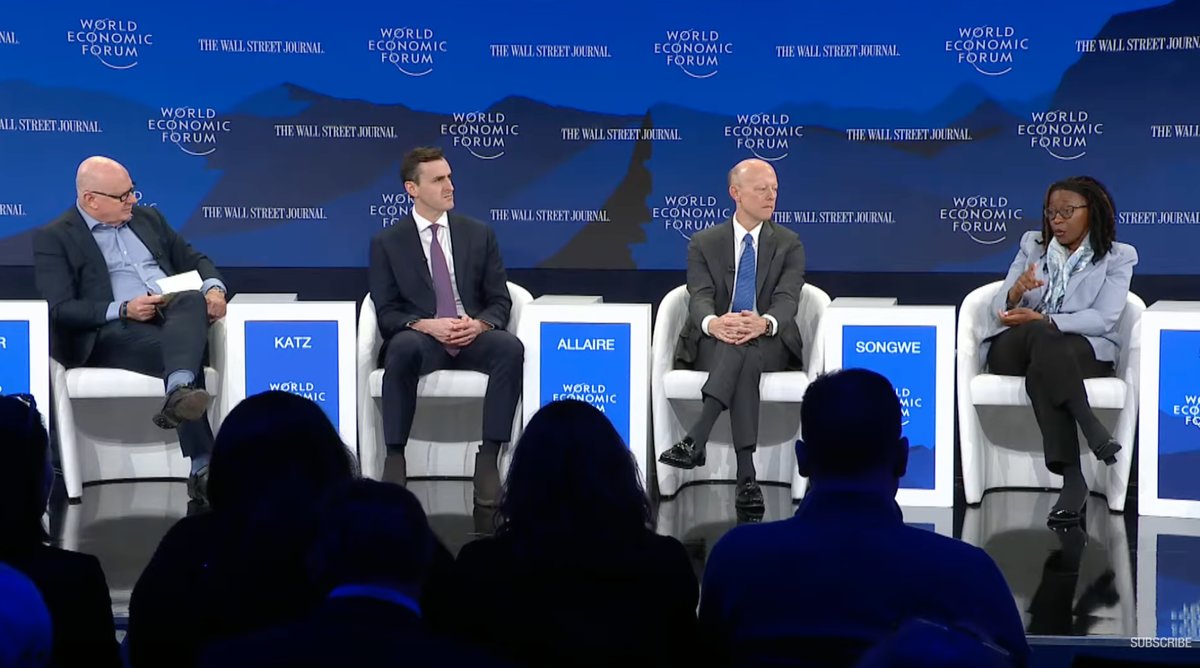 Vera Songwe, right, speaks at the World Economic Forum in Davos, Switzerland. Source: WEF
Songwe noted that inflation rates have surpassed 20% across approximately 12 to 15 African nations since the onset of the COVID-19 pandemic. She argued that stablecoins can help individuals hedge against inflation, providing a means to preserve value through currencies less susceptible to inflationary pressures. She stated:
“650 million people don’t have access to a bank account in Africa. With a smartphone, you have access to stablecoins, allowing you to save in a currency that is not exposed to inflation fluctuations that can impoverish you.”
In terms of usage, stablecoins are most prevalent in countries such as Egypt, Nigeria, Ethiopia, and South Africa, which are characterized by high inflation or stringent capital restrictions. Most transactions are initiated by small and medium enterprises, indicating that stablecoins are instrumental in promoting financial inclusion.
Songwe is the chair and founder of the Liquidity and Sustainability Facility and a nonresident senior fellow at the Brookings Institution. Previously, she acted as an under-secretary-general of the UN and was the executive secretary of the UN Economic Commission for Africa.
Recent Developments in Crypto Legislation in Africa
A recent Chainalysis report indicated that Sub-Saharan Africa is among the globe’s fastest-growing areas for cryptocurrency adoption, receiving over $205 billion in on-chain value from July 2024 to June 2025, marking a significant year-over-year increase and ranking third worldwide.
As the continent’s crypto adoption continues to intensify, responses from governments are beginning to scatter from full legalization to cautious regulatory oversight. Ghana legalized cryptocurrency trading in December, establishing a formal regulatory framework for the industry. Meanwhile, Nigeria introduced regulations requiring crypto service providers to associate transactions with users’ tax identification numbers, aiming to integrate cryptocurrency into the tax system.
In South Africa, the national bank has expressed concerns about the stability of crypto assets and stablecoins amid rising local adoption.