


Most Institutional Investors Perceive Bitcoin as Undervalued, According to Coinbase
Approximately 70% of institutional investors hold the view that Bitcoin is undervalued, pricing it in the range of $85,000 to $95,000. However, Bitcoin continues to lag behind precious metals and the stock market, as noted in a recent report by Coinbase.
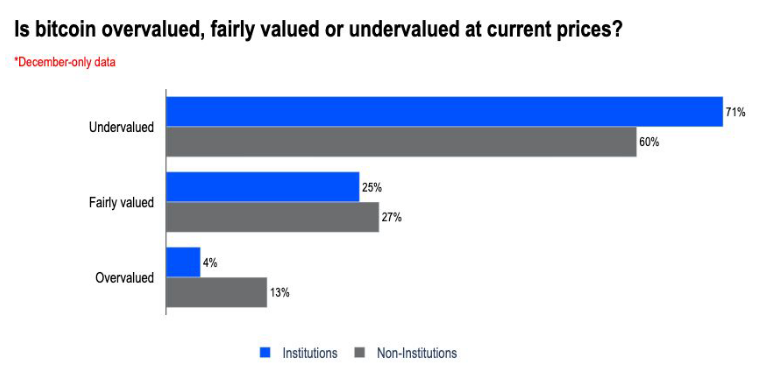
According to Coinbase’s “Charting Crypto Q1 2026” report, a survey conducted among 75 institutional and 73 independent investors from early December to January indicates that 71% of institutions and 60% of independent investors believe Bitcoin is currently undervalued.
 Bitcoin Survey
Survey on whether Bitcoin is undervalued, fairly priced, or overvalued. Source: Coinbase
Bitcoin Survey
Survey on whether Bitcoin is undervalued, fairly priced, or overvalued. Source: Coinbase
At present, Bitcoin is priced at around $87,600, reflecting a decline of over 30% from its highest recorded value of $126,080 back in October. The market’s general trend has been largely sideways or downward following a significant crash on October 10, which led to more than $19 billion in leveraged positions being lost.
Additionally, market sentiment remains low, with external pressures from geopolitical uncertainties, particularly concerning renewed tariff threats from the Trump administration and escalating tensions in the Middle East. Coinbase suggests that the current trend may persist, with geopolitical tensions posing a potential risk to investor sentiment.
In stark contrast, the prices of traditional safe-haven assets like gold have surged, with gold reaching record highs above $5,000, while silver has doubled in value since October.
Investor Strategies
Of those surveyed, 80% of institutional investors plan to maintain or increase their crypto investments in response to another 10% drop, indicating strong long-term confidence in the cryptocurrency sector. Over 60% of respondents have either maintained or increased their crypto holdings since October when Bitcoin reached its peak.
Coinbase also pointed out potential economic advantages for the crypto market, predicting that the Federal Reserve might enact two rate cuts in 2026, supporting risk assets, including cryptocurrencies, at a time when inflation remains stable at 2.7% and real GDP growth exceeds 5% in the fourth quarter.