




HYPE saw a remarkable increase of 20% on Monday after the team behind HyperCore, the fundamental technology supporting Hyperliquid’s Layer-1 network, endorsed the HIP-4 proposal aimed at introducing prediction markets.
This new feature will enable fully collateralized contracts on Hyperliquid, the leading decentralized perpetual futures platform, allowing traders to place bets on various events such as political elections and sports.
In a post on X, Hyperliquid shared that the support for this feature came as a result of “significant user demand” for prediction markets and options-like tools, stating that HIP-4 could facilitate the development of additional innovative applications on Hyperliquid.
The proposed outcome contracts would operate similarly to a betting slip, providing a capped payout and settling within a set range, free from leverage, liquidations, or margin calls.
Hyperliquid indicated that this outcomes trading feature is still in progress and is currently undergoing testing on their testnet. These markets will be denominated in Hyperliquid’s own stablecoin, USDH.
The announcement resulted in HYPE rising 19.5% to $37.14, following a notable 46.9% rally over the past month, as the broader crypto market saw a downturn, according to data from CoinGecko.
Join the discussion on Reddit Subscribe on Telegram
Related Articles:
The integration of Hyperliquid with prediction markets combines two influential trends in crypto over the last two years, with both on-chain perps and blockchain-centric prediction markets now consistently generating hundreds of millions of dollars in trading volume daily.
Weekly Perps Trading Volume Still Exceeds $200 Billion
Despite a cooling trend since early November after reaching a peak of $341.7 billion from November 3 to 9, the weekly trading volume of perps remains above $200 billion across the past month, according to DeFiLlama data.
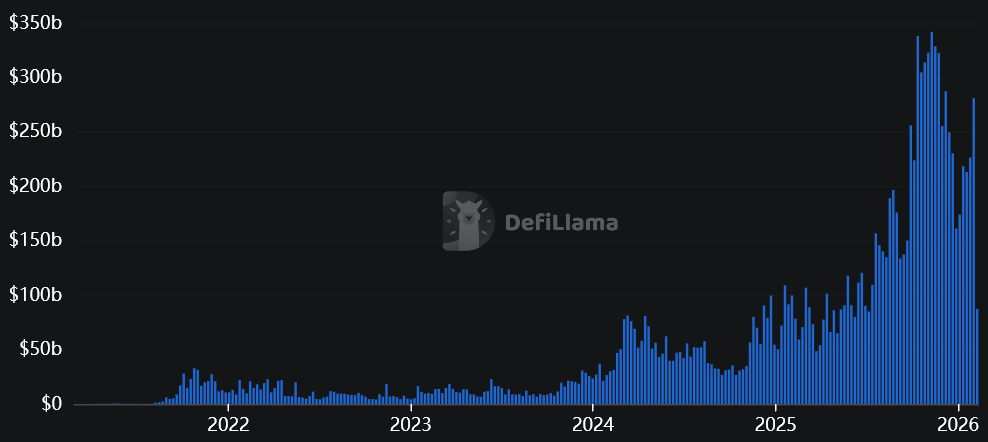 Weekly change in perps trading volume since February 2021
*Source: DeFiLlama
Weekly change in perps trading volume since February 2021
*Source: DeFiLlama
These trading volumes for the last month show figures three to four times higher than those observed in January 2025.