
Telegram's Durov Critiques Spain's Proposed Online Age Verification
Pavel Durov, co-founder of Telegram, warns against Spain's initiative for online age verification, labeling it as a step towards heightened surveillance rather than child protection.


Pavel Durov, co-founder of the Telegram messaging app, raised concerns over the Spanish government’s strategy for online age verification, which is intended to limit access to social media for users under 16.
Durov characterized the proposed legislation as a mechanism for tighter government censorship, user de-anonymization, and increased mass surveillance. He stated on Wednesday:
“Pedro Sánchez’s government is pushing dangerous new regulations that threaten your internet freedoms. Announced just yesterday, these measures could turn Spain into a surveillance state under the guise of ‘protection.’”
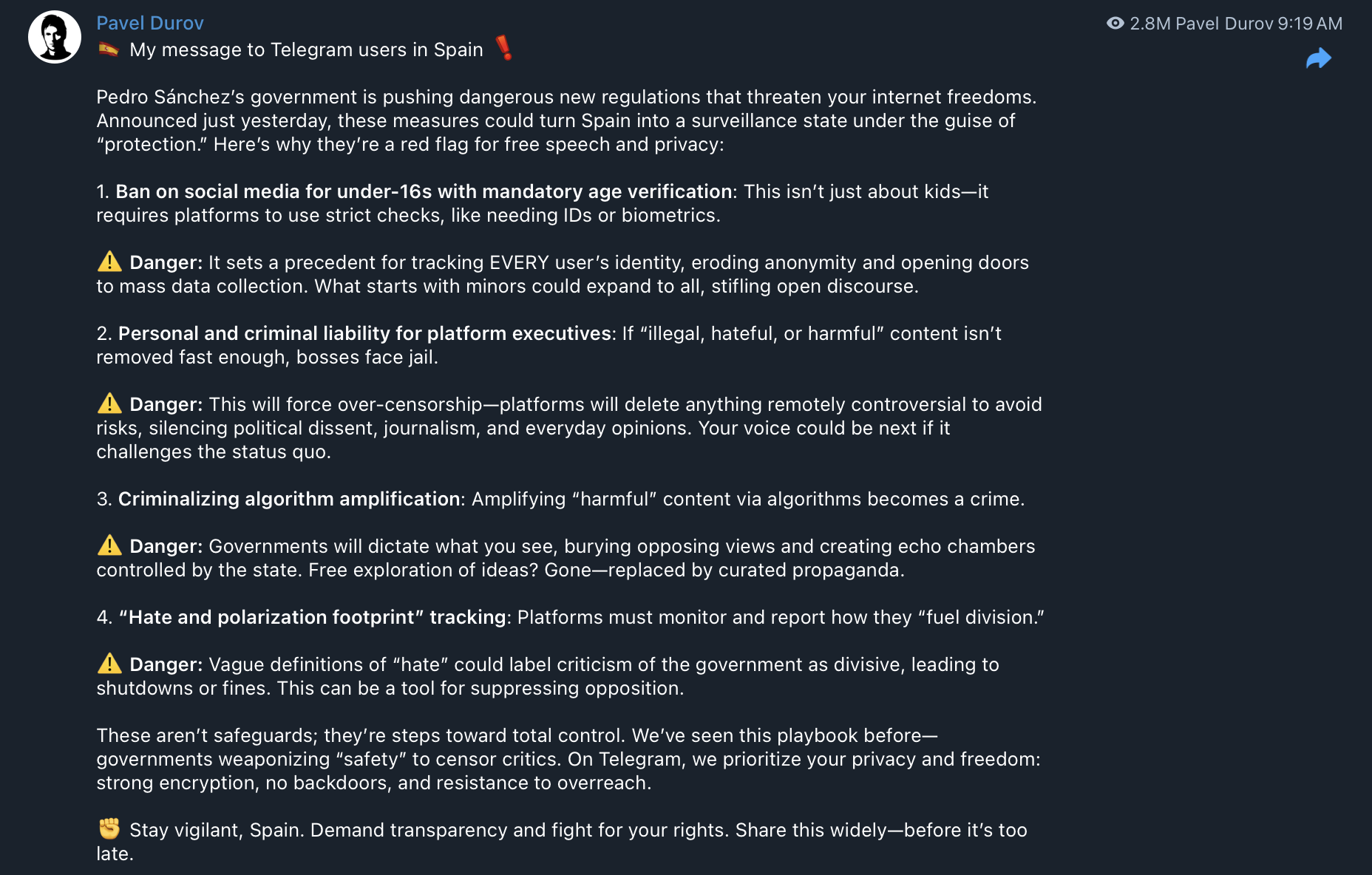 Pavel Durov
Source: Pavel Durov
Spain’s Prime Minister, Pedro Sánchez, during an announcement on Tuesday, disclosed that the nation plans to implement online age verification policies similar to those in the UK. He expressed:
“Social media has become a failed state. If we want to protect our children, there is only one thing we can do: Take back control.”
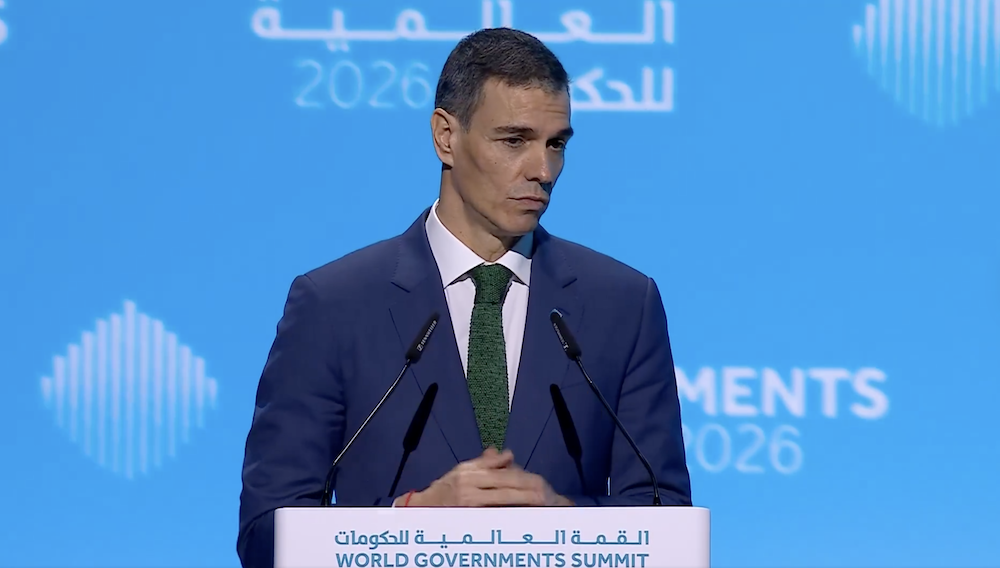 Pedro Sánchez
Source: Pedro Sánchez
These remarks have prompted considerable criticism from privacy advocates and those in the crypto space, who argue that such measures stifle free speech and empower government censorship.
Critics’ Perspectives on Age Verification
Critics argue age verification is primarily about control rather than child protection. One user remarked:
“You want to control people who expose the corruption in your government.”
Elon Musk also reacted negatively by ridiculing Sánchez. Meanwhile, journalist Taylor Lorenz remarked:
“None of this is about ‘protecting children.’”
Furthermore, Boris Bohrer-Bilowitzki, CEO of Concordium, added that while it’s essential to shield minors from harmful content, the methods currently in place are ineffective, driving users to adopt VPNs to bypass controls. He proposed using blockchain technology to verify user identity securely without disclosing personal details.
Related Articles: