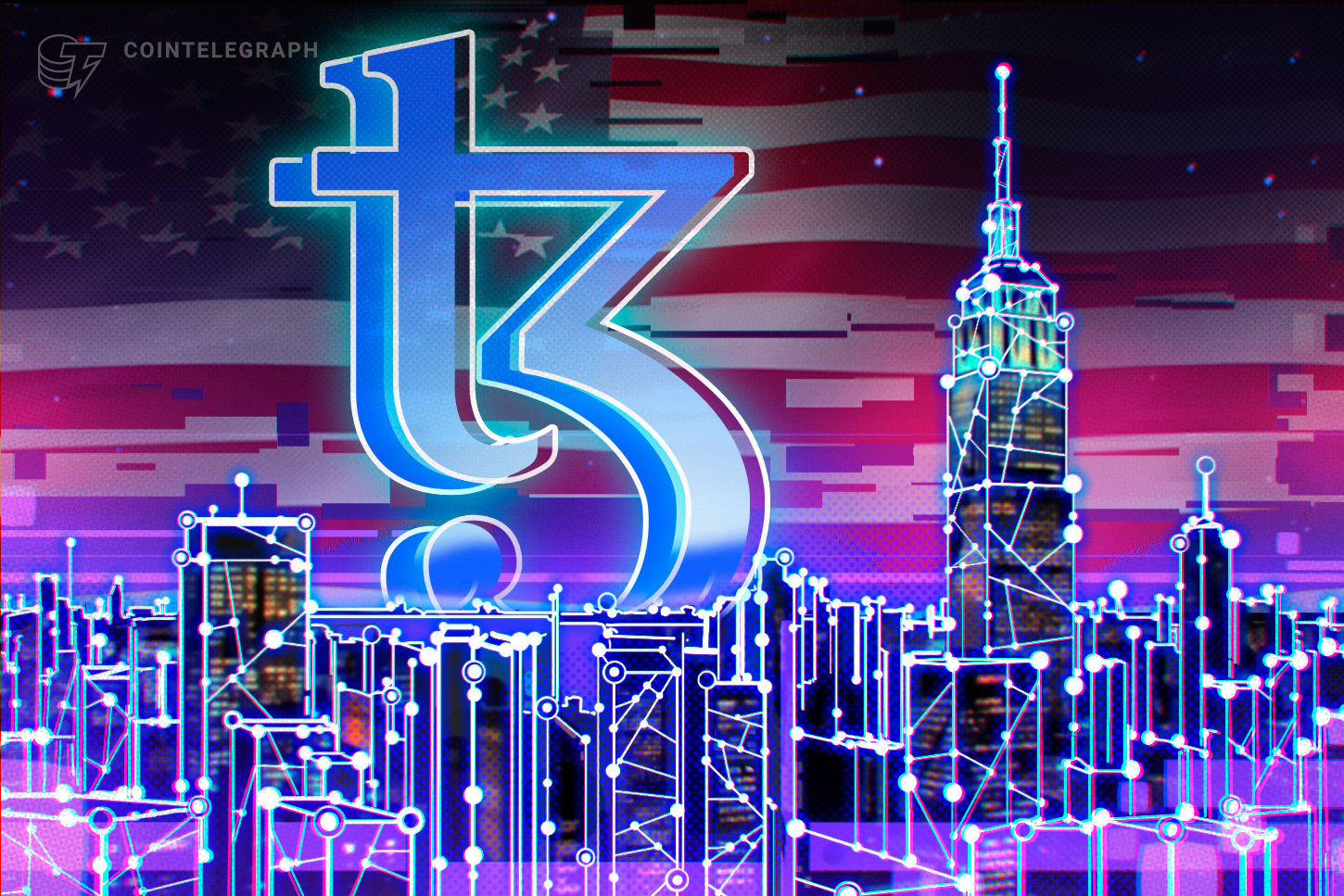
Bitnomial Introduces First US-Regulated Tezos Futures for Retail Investors
Bitnomial has launched its first futures contracts for Tezos' XTZ, allowing both institutional and retail traders access to this cryptocurrency's price movements on a US-regulated platform.



Bitnomial, the Chicago-based cryptocurrency exchange, has rolled out futures for the Tezos XTZ token, establishing the first time such assets are available on a US Commodity Futures Trading Commission-regulated marketplace. The announcement made on Wednesday includes that these new contracts enable both institutional and retail traders to engage in XTZ price movements using cryptocurrency or US dollars as margin.
Futures contracts facilitate traders in hedging risks or gaining price exposure by committing to buy or sell an asset at a predetermined price on a future date, without the need for actually holding the asset.
Such regulated futures markets are deemed essential for fostering broader institutional engagement in the US, paving the way for potential spot exchange-traded funds (ETFs), thanks to their provision of uniform price discovery and regulatory oversight under the CFTC.
Michael Dunn, the president of Bitnomial, stated, “A CFTC-regulated futures market with six months of trading history checks a key box under the SEC’s generic listing standards for spot ETFs.”
Dunn further mentioned that the company is actively exploring new tokens for potential derivatives markets for both US institutions and retail investors, though he refrained from detailing specific assets.
In the past, Bitnomial has successfully listed futures for various assets including Cardano (ADA), XRP, and Aptos (APT), making it one of the few platforms to provide regulated crypto derivatives beyond Bitcoin (BTC) and Ether (ETH) in the US.
Bitnomial’s ambitions to offer futures tied to altcoins have encountered regulatory challenges. In August 2024, the exchange attempted to self-certify XRP futures with the CFTC, but faced backlash from the SEC, which claimed that such contracts necessitated registration as a securities exchange.
After initiating a lawsuit against the SEC in October 2025—and later withdrawing it—Bitnomial launched XRP futures in March, citing the agency’s changing approach to crypto policy.
A Brief Overview of Tezos
Tezos launched its mainnet in June 2018 following an initial coin offering in 2017 that raised approximately $232 million in Bitcoin and Ether. While it wasn’t the pioneer proof-of-stake blockchain, Tezos was among the first layer-1 networks that integrated proof-of-stake with formal on-chain governance, allowing token holders to approve protocol updates and evolve the network without resorting to hard forks.
During the non-fungible token boom (2021-2022), Tezos established itself as a cost-effective and energy-efficient alternative to Ethereum for NFT minting and trading. With Ethereum’s gas fees soaring, creators and companies like Ubisoft favored Tezos for its lower transaction costs and efficient proof-of-stake mechanics.
In its pursuit of prominent sports partnerships, Tezos has teamed up with Red Bull Racing and McLaren Racing, and is reportedly planning a sponsorship with Manchester United worth over $27 million per annum.
At its peak, Tezos’ native token XTZ reached an all-time high of $9.12 in October 2021, but has since plummeted nearly 95% to around $0.46. The Tallinn protocol upgrade on January 25 cut base-layer block times to six seconds, marking the 20th on-chain upgrade for the network.