



Despite bearish pressures and disappointing US economic indicators, Bitcoin’s increasing hashrate and the introduction of new on-chain security measures elevate the likelihood of it soaring to $70,000.
Market Insight
Key Points:
- A marginal 4.3% rise in Bitcoin’s price to $69,600 could induce over $600 million in forced liquidations of bearish positions.
- The uptick in network hashrate and the BIP-360 quantum security initiative helps to alleviate long-term tech-related worries.
Bitcoin (BTC) has remained stable within a tight price range of $65,900 to $70,500 over the past week. This prolonged stagnation has emboldened bearish traders, especially considering resilience in other major asset classes. However, should Bitcoin take months to recover to $90,000, excessive bearish confidence may trigger forced liquidations in futures, redirecting momentum back to bullish traders.
Market Analysis
Market estimate for Bitcoin futures liquidations, USD source: CoinGlass
CoinGlass estimates suggest that a price increase to $69,600 could result in the liquidation of over $600 million in short positions. In February, when Bitcoin soared from $60,200 to $70,560, short liquidations reached $385 million. Thus, just a 4.3% uptick from $66,700 could deliver a harsher blow to those expecting further declines.
Bulls have a possible trigger with the sluggish macroeconomic indicators. The US reported lackluster GDP growth for Q4 2025, with a mere 1.4% annualized rate, significantly below the anticipated 2.9%, according to Yahoo Finance. This deceleration presents challenges for corporate earnings expectations, typically leading to waning investor interest in stock markets.
On the inflation front, the US personal consumption expenditures price index, excluding food and energy, rose by 0.4% month-on-month. With the S&P 500 losing its bullish momentum, investors might be compelled to pivot towards on-chain markets in search of better returns.
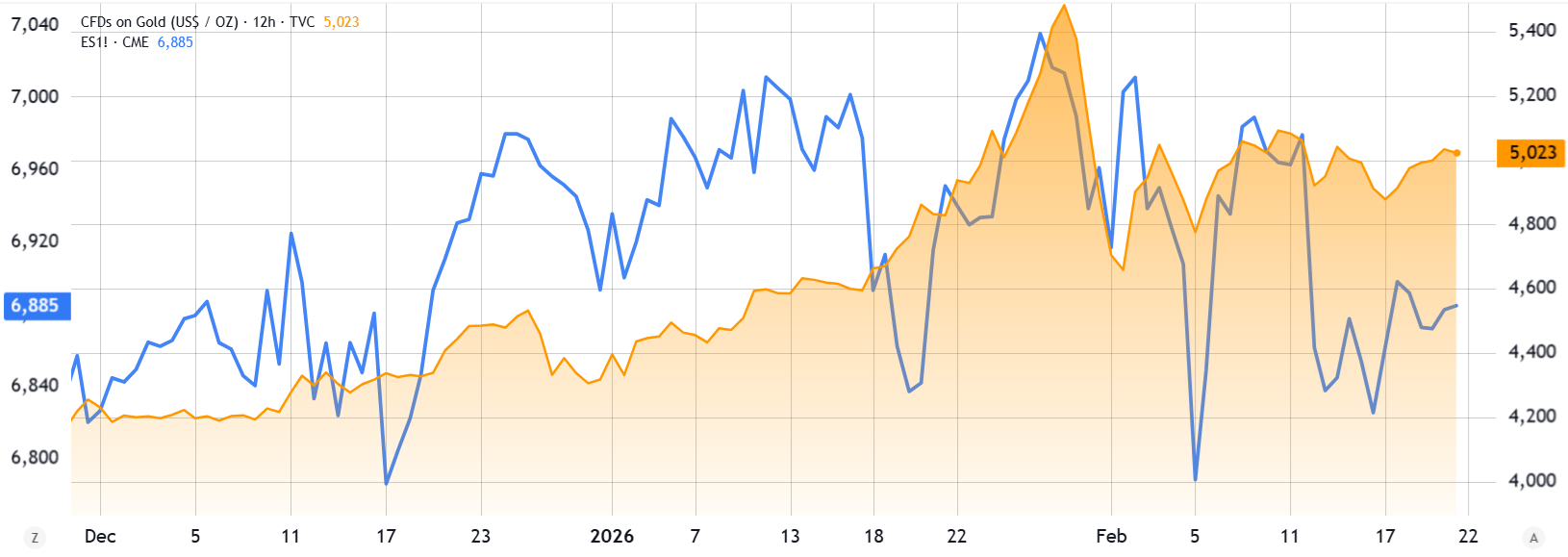 S&P 500 Futures
Comparative analysis of S&P 500 futures versus gold/USD source: TradingView
S&P 500 Futures
Comparative analysis of S&P 500 futures versus gold/USD source: TradingView
As tensions escalate in the Middle East, investors may look for alternative hedges, especially with gold prices surging 25% over the last three months. Gold’s market capitalization has now reached about $35.2 trillion, significantly exceeding Nvidia’s (NVDA US) valuation of $4.6 trillion.
Currently, Bitcoin is trading approximately 47% below its peak value, which may make it an enticing option for macro traders in terms of risk versus reward. Yet, Bitcoin bears maintain a strong grip, evident from the disinterest in going long in the futures market.
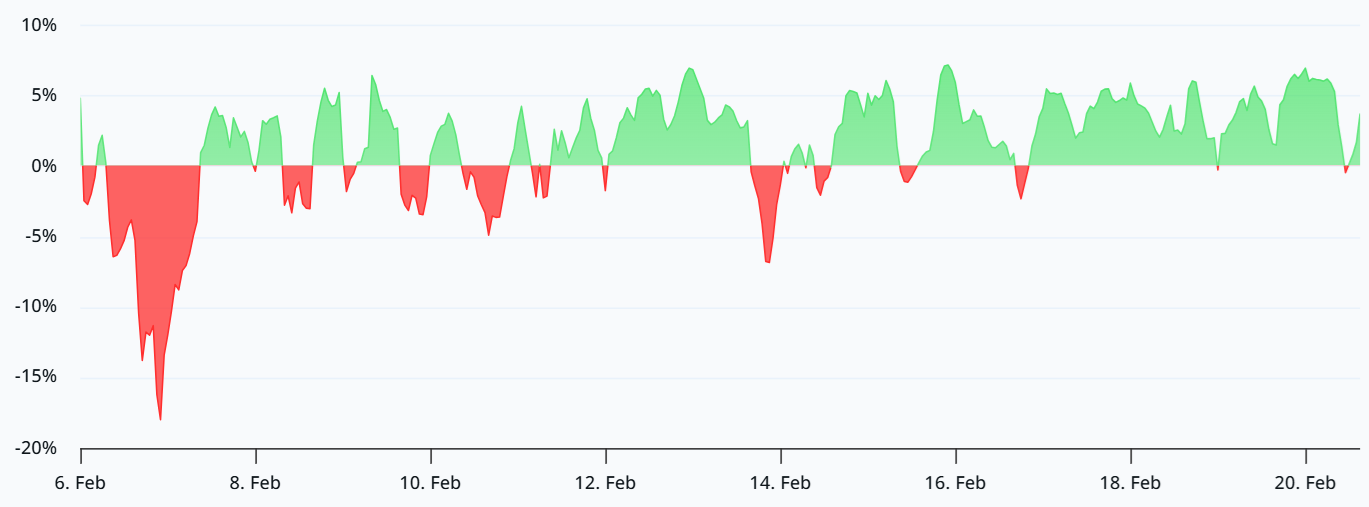 BTC Funding Rate
BTC perpetual futures funding rate source: Laevitas.ch
BTC Funding Rate
BTC perpetual futures funding rate source: Laevitas.ch
The BTC perpetual futures funding rate has struggled to remain above the 6% neutral threshold over the last fortnight. Notably, the recent trend of negative funding rates reflects that bears are committed, even as Bitcoin tests the $66,000 support. Regaining momentum remains a challenge for the bulls, especially in light of $1.6 billion in liquidations during the three-day market drop that began on February 6.
Strengthening Bitcoin’s Security
The recent apprehension around Bitcoin’s network security is dissipating, facilitating a potential recovery.
 Hashrate Estimate
Seven-day hashrate estimate for Bitcoin source: HashrateIndex
Hashrate Estimate
Seven-day hashrate estimate for Bitcoin source: HashrateIndex
The average hashrate has bounced back to 1,100 exahashes per second, reaching levels seen in late January. Previous concerns about miners potentially exiting for AI fields have proven unfounded, as the sector demonstrates notable resilience.
Moreover, BIP-360 has alleviated concerns surrounding quantum computing threats. This proposal outlines a strategy for post-quantum security via a backward-compatible soft fork and eliminates the exposed key-path spend in Taproot, ensuring public keys remain hidden until needed for spending.
This tech roadmap gives bulls a clear strategy to reclaim the market narrative, with potential for a short squeeze to push Bitcoin back over $70,000.