



Bitcoin’s mining difficulty surged by 15% to 144.4 trillion as of February 20, according to CoinWarz data, reversing an earlier drop of 11% which marked a significant decline not seen since the mining ban in China back in 2021.
This decline was triggered by significant disruptions from winter storms affecting power grids and forcing miners offline. Foundry USA, the largest mining pool, saw its hash rate plummet from nearly 400 EH/s to about 198 EH/s during this time, but has since managed to recover.
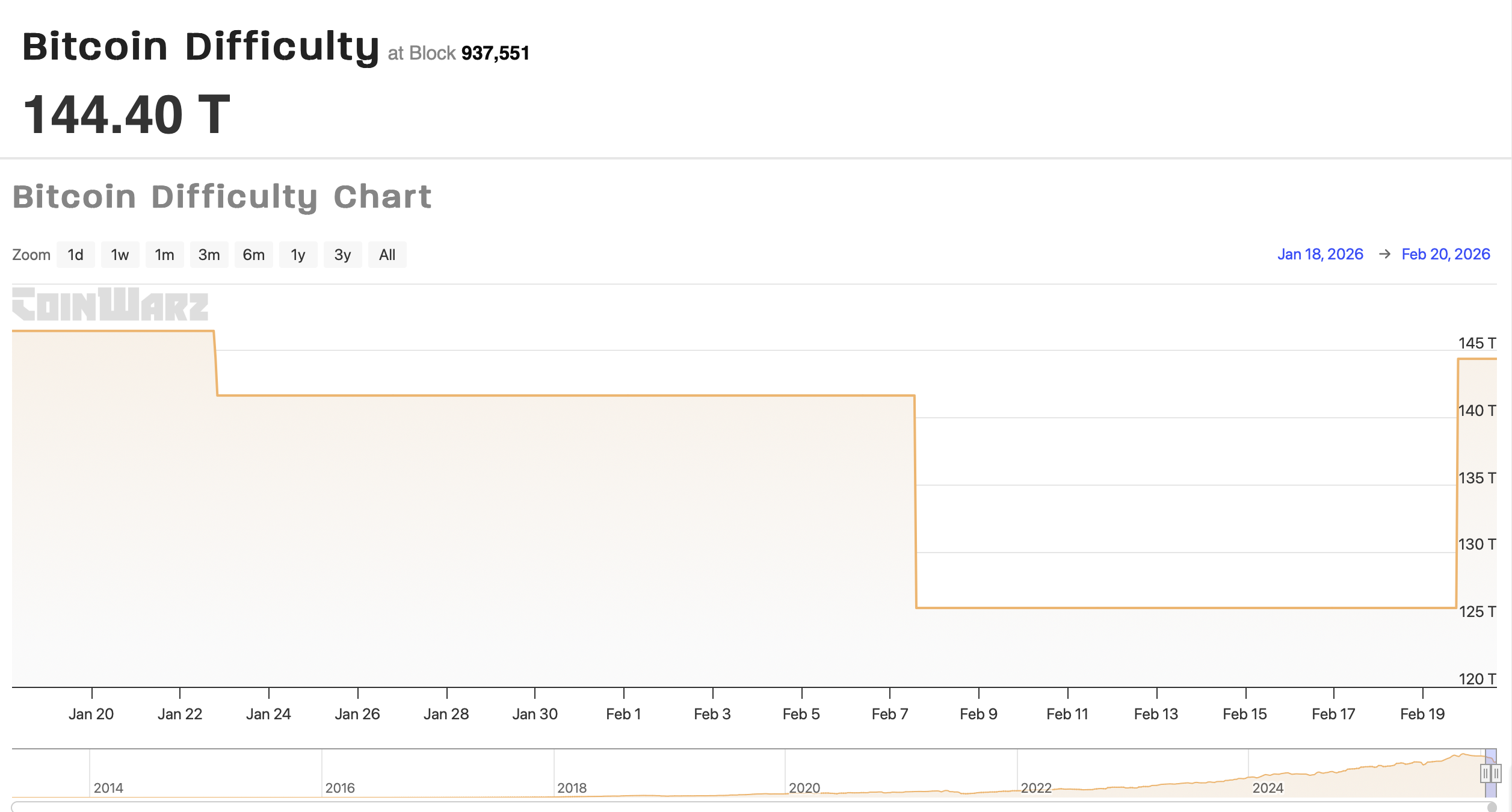 Bitcoin Difficulty Chart. Source: CoinWarz
Hash rate reflects the total computing power securing the Bitcoin network, while mining difficulty adjusts approximately every two weeks to maintain a target block production time of 10 minutes.
Bitcoin Difficulty Chart. Source: CoinWarz
Hash rate reflects the total computing power securing the Bitcoin network, while mining difficulty adjusts approximately every two weeks to maintain a target block production time of 10 minutes.
As miners in the U.S. resumed operations post-storm, the hash rate rebounded, which contributed to the latest upward adjustment of mining difficulty.
Higher mining difficulty enhances the security of the Bitcoin network but also increases the computational power required to earn rewards, squeezing already tight margins for miners facing rising operational costs.
US Miners Profit from Grid Curtailments Amid Winter Storm
While winter storms in January saw many U.S. Bitcoin miners offline, they still managed to generate revenue. Numerous miners are involved in demand response programs or have flexible power contracts that allow them to sell electricity back to the grid when prices are high.
Bruce Rodgers, the Chairman and CEO of LM Funding America, stated, “In January, our power infrastructure highlighted the flexibility of our operating model.”
According to a report published in February, LM Funding curtailed operations during the storm but redirected its contracted power back to the grid, achieving over a quarter of its normal quarterly energy and curtailment revenue in just one weekend.
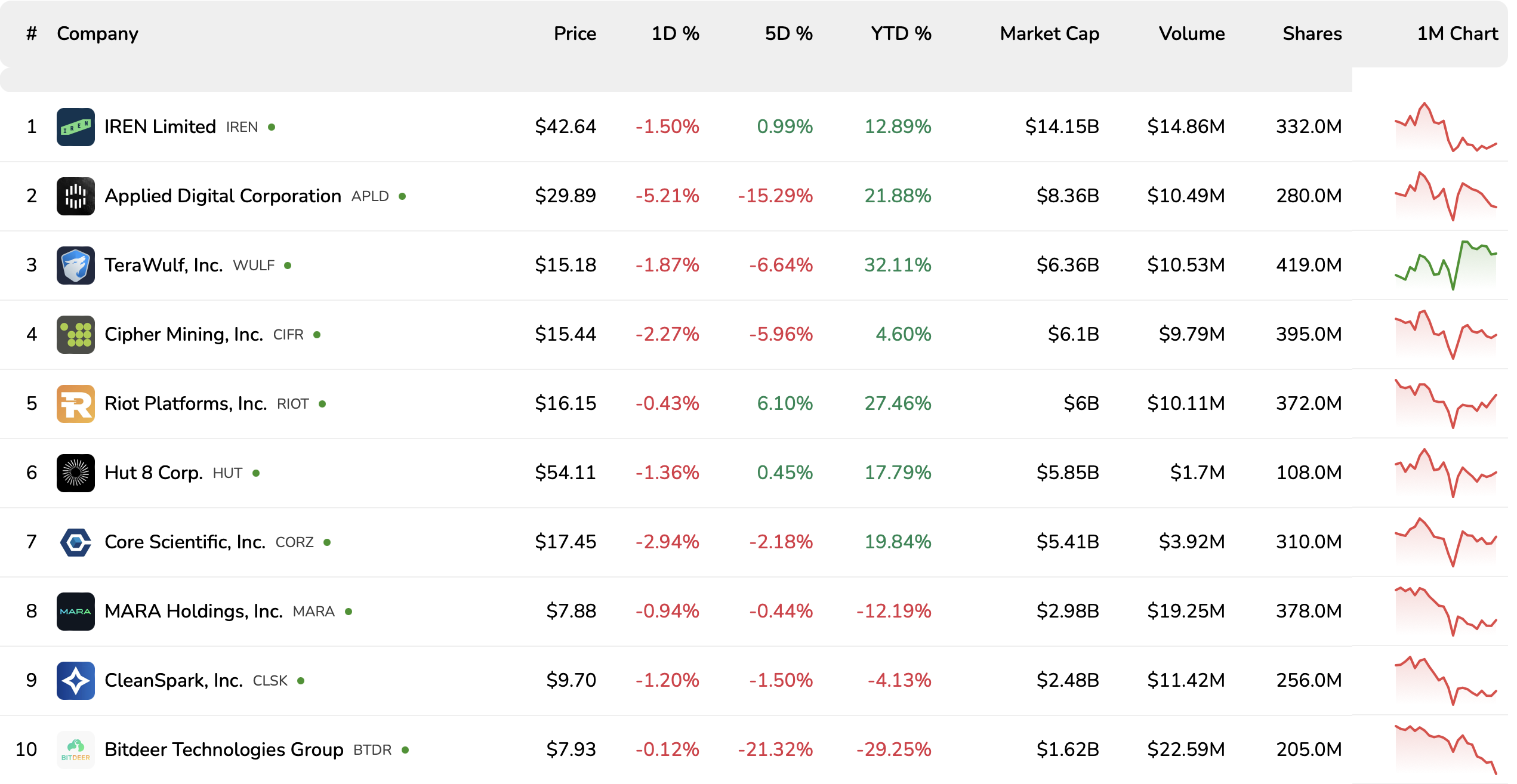 Top Bitcoin mining stocks by market cap. Source: Bitcoinminingstock.io
Canaan Inc., a Singapore-based mining hardware manufacturer, mentioned in its production update that it too took part in power curtailments through collaboration with site partners to balance grid demand.
Top Bitcoin mining stocks by market cap. Source: Bitcoinminingstock.io
Canaan Inc., a Singapore-based mining hardware manufacturer, mentioned in its production update that it too took part in power curtailments through collaboration with site partners to balance grid demand.
Since the 2021 mining crackdown in China, the U.S. has become a key hub for Bitcoin mining, operating large facilities in crypto-friendly regions such as Texas and Georgia. As noted by the Cambridge Centre for Alternative Finance, the U.S. now represents over one-third of the global Bitcoin hash rate.