


Bitcoin’s return to its previous all-time high may be contingent upon the extent of its current decline, where deeper dips have historically required longer recovery times.
A more significant downturn could push Bitcoin’s recovery to Q2 2027, as more substantial drops generally result in extended recovery periods.
Bitcoin Decline Extends Recovery Timeline
According to Ecoinometrics, the data clearly correlates the depth of a decline with the duration of recovery. Moreover, every additional 10% drop has historically increased the recovery time by approximately 80 days. Currently at a 48% decline, Bitcoin’s recovery cycle might take nearly 300 days from its peak of $126,000 in October 2025.
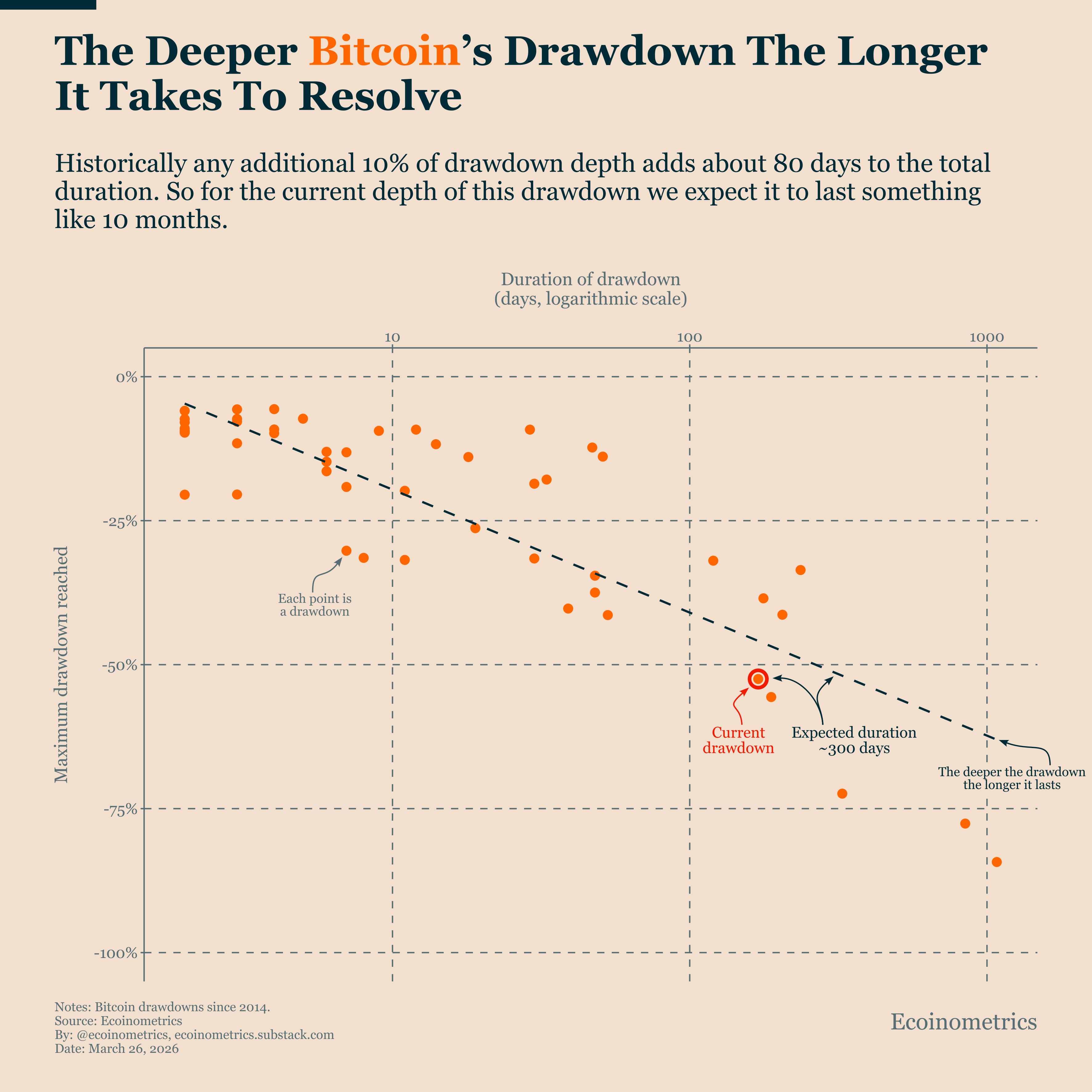 Bitcoin drawdown analysis
 based on correction depth. Source: Ecoinometrics
Bitcoin drawdown analysis
Bitcoin drawdown analysis based on correction depth. Source: Ecoinometrics
As of now, about 172 days have transpired, leaving an estimated 125 to 130 days if the lowest price has been confirmed at $60,000. However, it’s possible that the cycle lows haven’t been reached, suggesting that Bitcoin might face further declines in the upcoming weeks.
The Bitcoin Combined Market Index (BCMI), which aggregates market value to realized value (MVRV), net unrealized profit/loss (NUPL), spent output profit ratio (SOPR), and market sentiment, currently hovers around 0.27, significantly surpassing the 0.15 threshold often seen at cycle bottoms in past downturns since 2018.
Deeper Lows Extend Recovery to Q2 2027
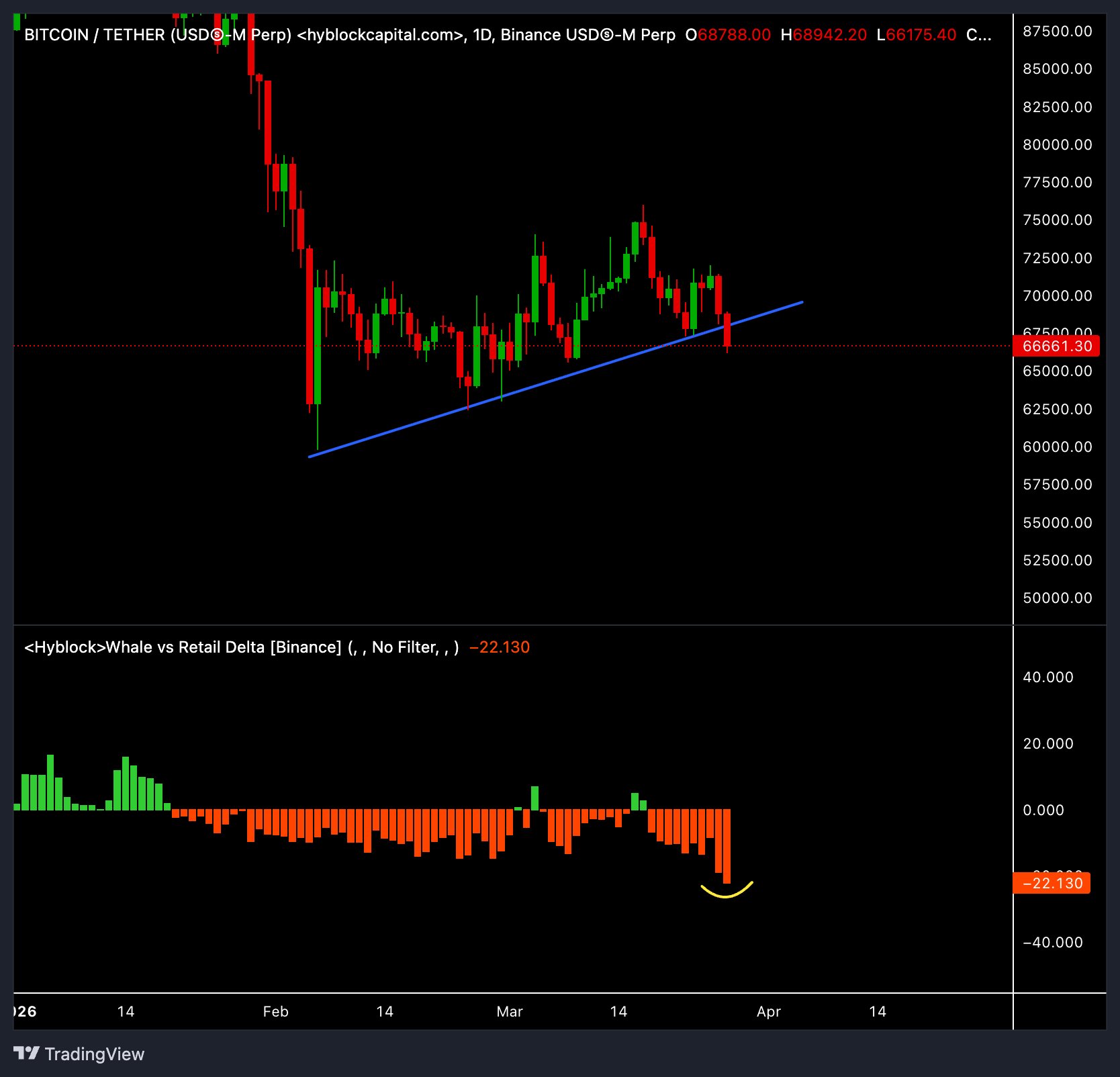
Crypto trader Ardi remarked that the delta between whale and retail selling has reached its most drastic level since October 2024 at -22.13, indicating severe selling pressure from large holders.
“Larger players are selling into this structure harder than they have in 18 months. That does not mean price has to collapse immediately. But it indicates that this level is under substantial testing with genuine selling pressure.”
 Bitcoin price movement
Bitcoin price, whale vs retail delta. Source: X
Bitcoin price movement
Bitcoin price, whale vs retail delta. Source: X
Woo projects that the price might rebound to the mid-$70,000s in March but anticipates further declines as market conditions are generally bearish, with liquidity deteriorating.
If Bitcoin’s price descends to the $40,000-$45,000 range, the decline from the peak could deepen to about 64-68%. Based on Ecoinometrics’ analysis, such a decline may protract the recovery timeframe to about 440 days from the cycle peak, pushing any reclaim of the previous high well into post-Q2 2027.
These projections are formulated from historical patterns and do not guarantee specific outcomes, with ongoing macroeconomic factors likely to influence Bitcoin’s recovery.
A report from The Kobeissi Letter highlighted that expected rate cuts in the US might be delayed until December 2027, all while a 51% chance of rate hikes looms in March 2027, potentially affecting Bitcoin’s recovery pace in comparison to prior cycles.