



Retail activity related to cryptocurrency fell by 11% in Q1 under macroeconomic stress. Despite this, Turkey and other emerging markets have demonstrated resilience, as revealed by data from TRM Labs.
Key Findings:
According to the Q1 Global Crypto Adoption Index by TRM Labs, retail crypto volumes dropped to $979 billion, marking an 11% year-over-year decline and the sharpest contraction since the bearish market in 2022.
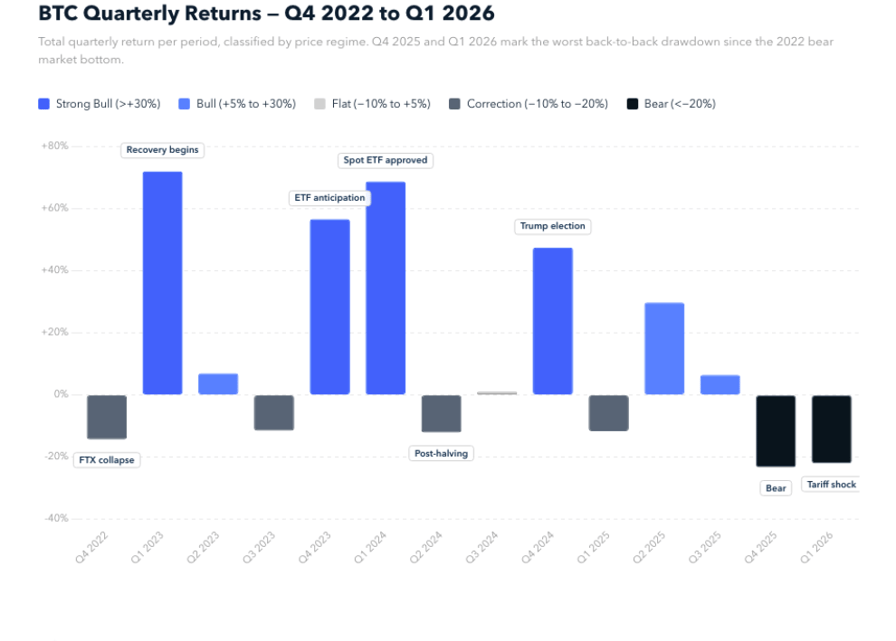
The downturn can be attributed to a stronger US dollar, rising interest rates, and an overall cautious market sentiment, which negatively influenced retail engagement. This decline coincided with a 22% fall in Bitcoin’s price during the same quarter.
Bitcoin, which peaked above $126,000 in late 2025, faced a downward trend throughout the first quarter along with a broader drop in digital asset valuations.
 Bitcoin Activity
Bitcoin’s quarterly returns from Q4 2022 to Q1 2026. Source: TRM Labs
Bitcoin Activity
Bitcoin’s quarterly returns from Q4 2022 to Q1 2026. Source: TRM Labs
Divergence of Markets
The report identifies a significant gap between high-income regions like the US, South Korea, the UK, and Germany, which experienced the most considerable declines in trading volumes, and emerging markets like Turkey, which saw a 7% year-over-year increase.
This divergence highlights the varied roles crypto plays in different economies: when constrained by local monetary policies or capital restrictions, crypto is perceived more as a valuable asset and an alternative currency.
 Emerging Markets
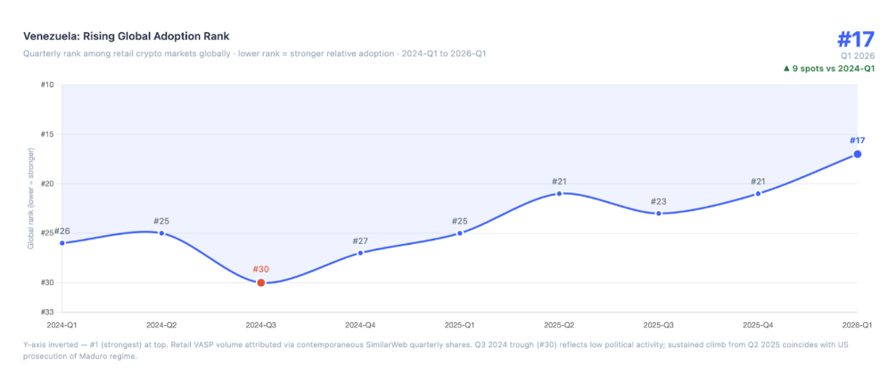
The study observed Venezuela as another notable market for increasing crypto adoption due to ongoing sanctions. Source: TRM Labs
Emerging Markets
The study observed Venezuela as another notable market for increasing crypto adoption due to ongoing sanctions. Source: TRM Labs
This contrast in adoption rates underscores a critical difference in demand, where crypto serves as a safeguard for value in regions with restrictive policies.