
Surge in Japanese Bond Yields May Disrupt Global Carry Trade and Crypto Markets
Japan's bond yields are at a decade high, posing challenges for risk assets including cryptocurrencies.


Japan’s 10-year bond yields have climbed to 1.86%, marking the highest level since 2008 and potentially signaling the end of the yen carry trade which has funneled substantial capital into riskier assets.
The surge in yields, close to doubling over the past year, raises concerns as Japan transitions from a long-standing low interest rate environment. This shift could reverse the influx of institutional investment into higher-yielding assets globally, impacting markets including cryptocurrencies.
“Trillions borrowed in yen, deployed into US Treasurys, European bonds, emerging market debt, risk assets everywhere,” explained economics author Shanaka Anslem Perera, noting that the foundational support for these investments is now diminishing.
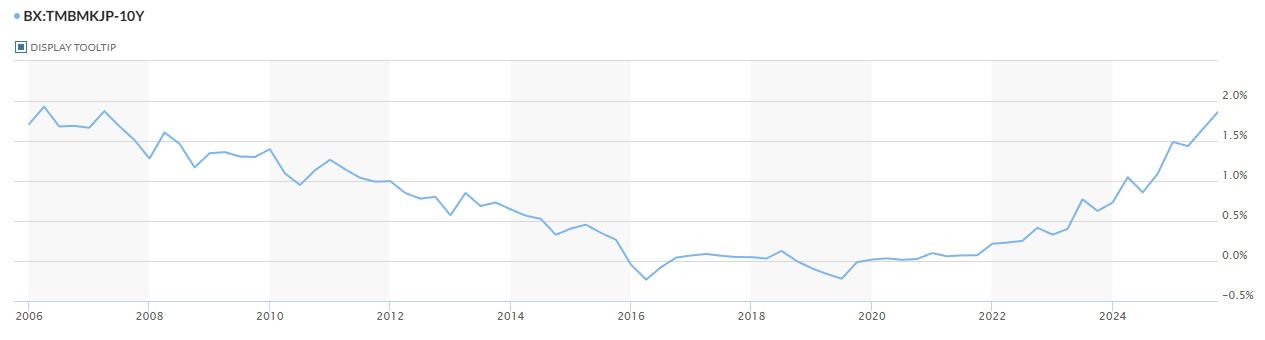 Japan’s 10-year bond prices hit their highest level since 2008. Source: MarketWatch
Japan’s bond yield hike is bad timing for the US
Perera noted that Japan is the largest holder of US Treasury securities, with about $1.1 trillion in investments. The rising yield could cause capital previously flowing to foreign markets to return home as domestic returns become more attractive.
“When domestic yields rise from nothing to nearly 2%, the math changes. Capital that flowed outward for decades faces pressure to repatriate.”
As the Federal Reserve ceases quantitative tightening and the US Treasury faces significant financing needs with a $1.8 trillion deficit, the timing of these changes could have serious implications for US markets.
Analysts caution against a potential flight to safety
Analysts predict that this trend could tighten liquidity in crypto markets, which often rely on the carry trade for investment. “Crypto is usually the first place where all of this shows up. It sits at the highest end of the risk spectrum, so even small shifts in liquidity lead to sharp moves,” said DeFi market analyst Wukong.
If global bond markets undergo significant shifts, investors may seek safer assets, leading to broader market sell-offs as they look to secure liquidity.