Scaramucci Forecasts Significant Growth Potential for Crypto at LONGITUDE Event
Regulatory clarity and institutional interest set the stage for a promising 2026 in the cryptocurrency sector, according to insights from various industry leaders.



The cryptocurrency sector is poised for a promising beginning in 2026, supported by clearer regulations and heightened institutional investment. Industry experts including Anthony Scaramucci, Kristin Smith, Eli Ben-Sasson, Ian Rodgers, Reeve Collins, and Joseph Chalom shared optimistic assessments for the upcoming year following a period of favorable developments, particularly in the United States.
Cointelegraph’s recent LONGITUDE gathering hosted discussions surrounding Solana’s expansion, increasing focus on privacy protocols, and experiences gleaned from security breaches in 2025.
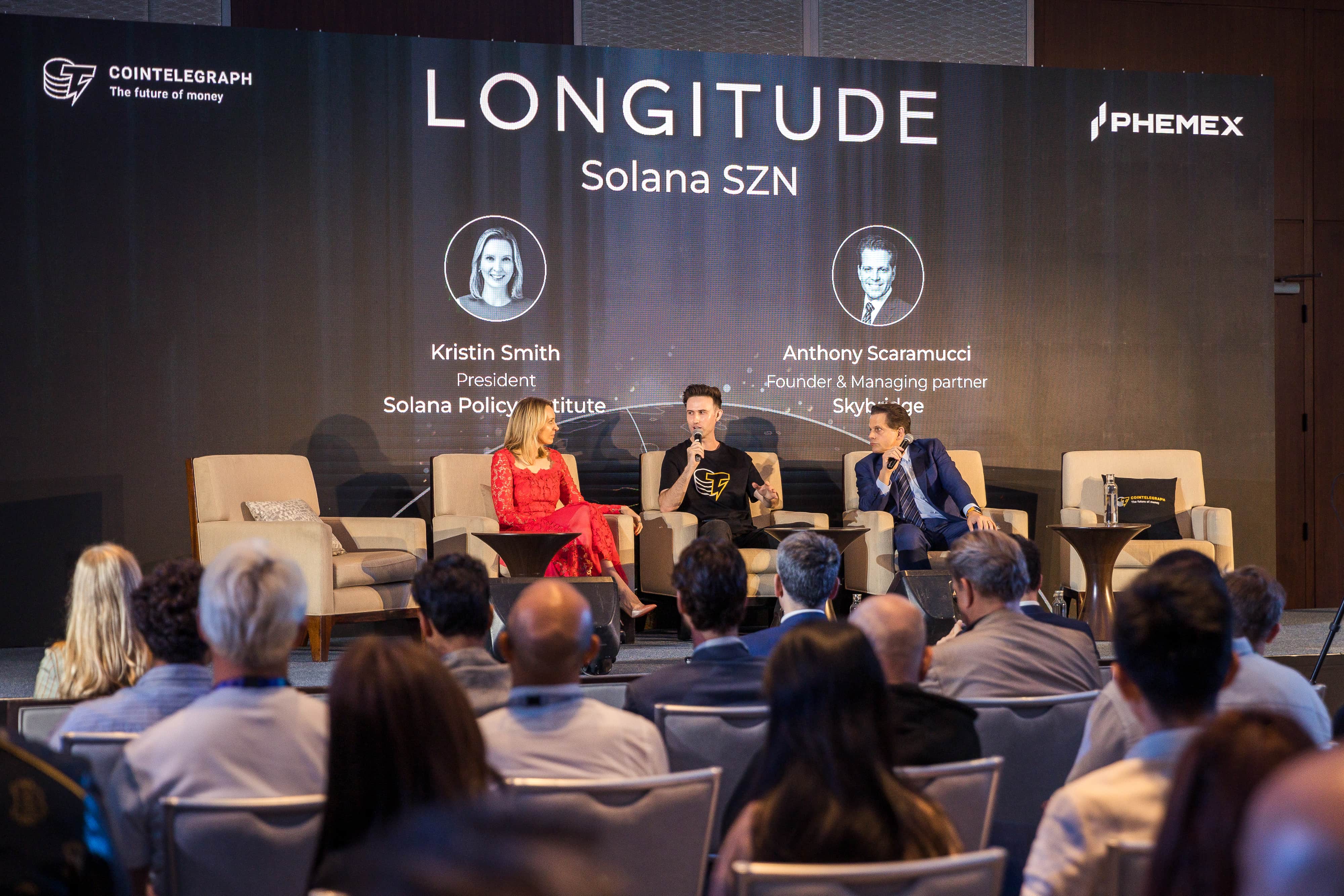 LONGITUDE Event Image
From left, Solana Policy Institute president Kristin Smith, Cointelegraph journalist Ciaran Lyons, and SkyBridge founder Anthony Scaramucci.
Kristin Smith commented, “There’s been a tremendous amount of progress in 2025, an unprecedented amount.” She noted her deep involvement in crypto-related discussions in Washington over the last year and a half.
“I think now that the US is catching up, you’re seeing policymakers globally determining how they can remain competitive and retain crypto within their borders rather than trying to exclude it.” (Translation: The US is making strides to keep cryptocurrencies competitive within its borders.)
Scaramucci emphasized the need for ongoing education among policymakers, a critical element in helping traditional finance embrace blockchain technologies.
“Kristin needs to engage with these individuals to clarify the necessity of passing this regulation in order to enhance the financial system, making it less costly and more efficient.” (Translation: Education of policymakers is vital for blockchain adoption.)
He pointed out that current traditional finance (TradFi) systems expend over $4 trillion on transaction verification worldwide.
“If we could transition to blockchain protocols like Solana, we might save approximately 75% of those costs, greatly transforming the global economy.” (Translation: Blockchain can offer huge savings by reducing transaction costs.)
However, outdated regulations have hindered innovation, preventing institutions from exploring blockchain applications.
“Even today, issuing a share or bond via blockchain is straightforward. But the current trading regulations are complex. That’s what we are addressing,” Smith explained.
Related: Scaramucci family invested over $100M in Trump’s Bitcoin mining firm: Report
With a concluding optimistic note, Scaramucci remarked on the intentions of major American financial institutions like BlackRock, Blackstone, and JPMorgan to tokenize assets using blockchain.
“Do not limit your perspective in 2025 to just short-term gains. Recognize the vast technological opportunities on the horizon.” (Translation: Focus on long-term technological advancements.)
Privacy in Demand
Eli Ben-Sasson, founder of StarkWare and co-creator of the Zcash protocol, also engaged in discussions highlighting the rising interest in privacy protocols.
“Over decades, I have mulled over privacy, from its mathematical foundations to its practical applications. Privacy exists across a spectrum.” (Translation: Privacy is a multifaceted concept.)
Ben-Sasson addressed the growing interest in Zcash (ZEC) in 2025 due to endorsements from recognized leaders in the field. He remarked:
“At one end of the spectrum, Zcash offers significant privacy for users in extreme circumstances, like those needing to evade surveillance.” (Translation: Zcash provides strong privacy features for users at risk.)
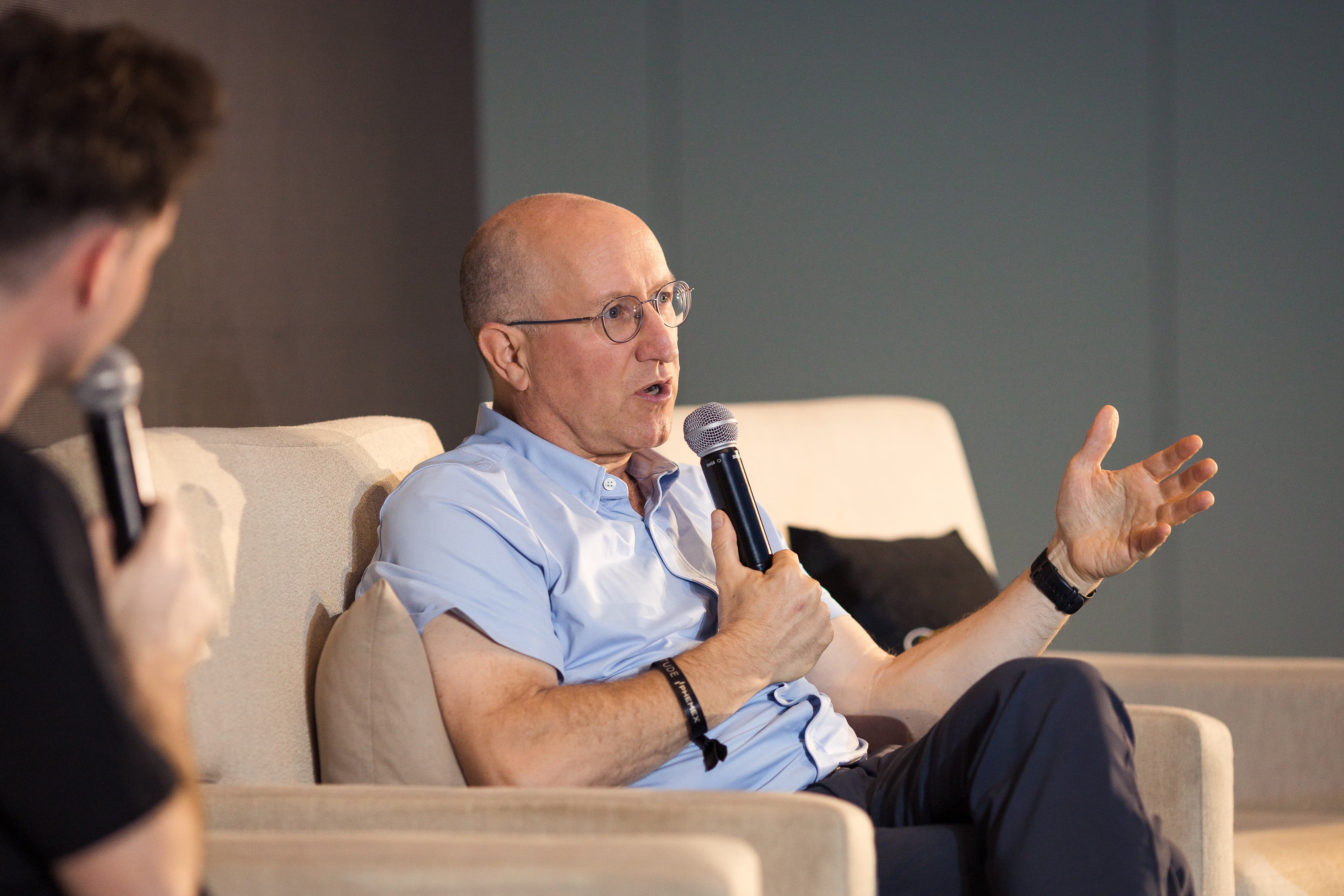 Eli Ben-Sasson
Eli Ben-Sasson, co-founder of StarkWare.
Ben-Sasson acknowledged that achieving high levels of privacy often compromises user experience due to increased complexity involved. However, enterprises are likely to seek different privacy requirements than those provided by Zcash, wanting to shield corporate relationships from both competitors and other customers.
Security Concerns
Security also took a central stage at LONGITUDE VII after a series of significant hacks in 2025.
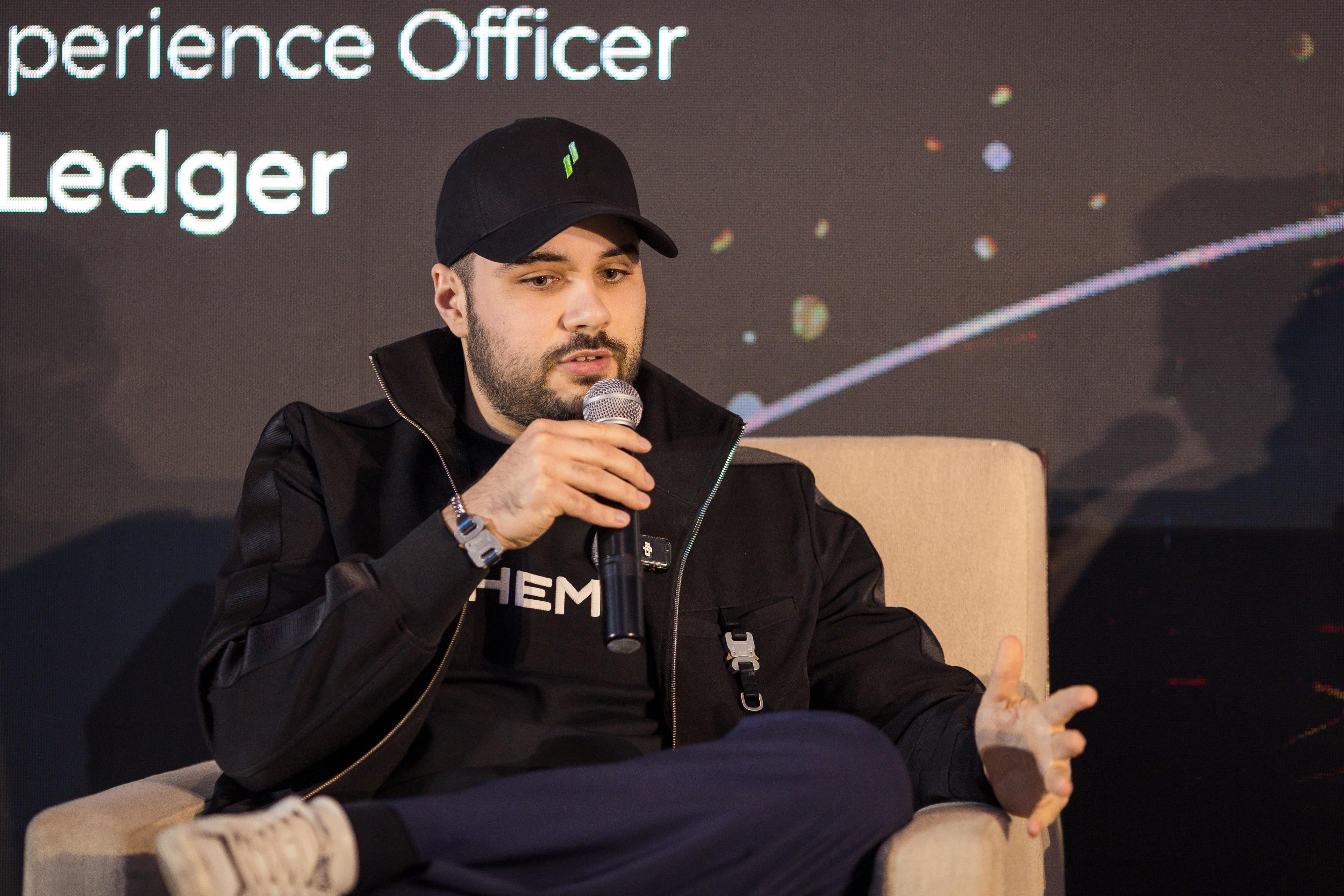 Federico Variola
Phemex CEO Federico Variola.
Phemex CEO Federico Variola highlighted the $1.6 billion theft of Ether (ETH) from Bybit in March as a crucial warning for the sector. He elaborated on the significance of social engineering and unverified access for everyday crypto users.
“The fusion of social elements with financial aspects within crypto participation should be avoided.” (Translation: Mixing social and financial engagements can create risks.)
He acknowledged that although risk minimization is essential and fundamental, owning a Twitter account or engaging in an ICO can still expose participants to substantial dangers.
Ian Rodgers, Chief Experience Officer at Ledger, stressed that it is up to service providers and infrastructure creators to carefully assess the risks their users may face.
“It is impossible to eliminate all risk. We must do our utmost to minimize risks and be prepared for potential failures.” (Translation: Total risk avoidance isn’t feasible; proactive risk management is essential.)
Cointelegraph’s unique LONGITUDE events are anticipated to return in 2026, with editions planned for various major global cities.