



Bitcoin’s correlation with gold recently hit zero for the first time since mid-2022 and could turn negative by January’s end.
Key Highlights:
- The BTC-gold divergence has often preceded significant bullish movements in Bitcoin.
- Current liquidity trends and cycle patterns suggest Bitcoin could aim for a price of $144,000 - $150,000.
Historical Trends Show Bitcoin Rallying After Gold Divergence
In previous occurrences, Bitcoin surged an average of 56% within around two months following a negative correlation with gold.
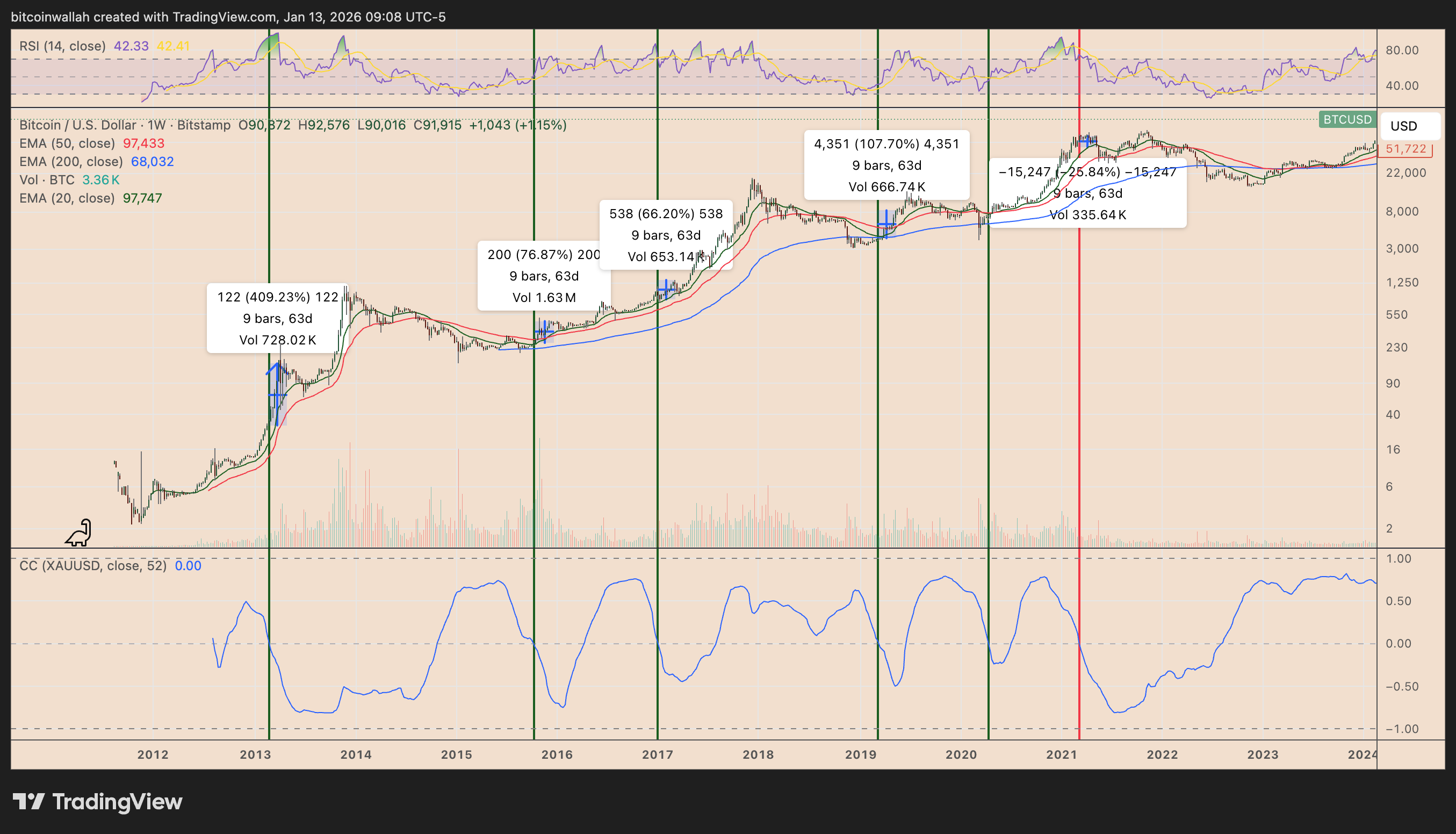 BTC/USD weekly chart. Source: TradingView
Bitcoin did not follow this historic pattern in May 2021, instead witnessing a 26% drop due to external factors including:
BTC/USD weekly chart. Source: TradingView
Bitcoin did not follow this historic pattern in May 2021, instead witnessing a 26% drop due to external factors including:
- Tesla stopping Bitcoin payments
- An intensified crackdown on mining and trading in China
Currently, the situation appears more promising, backed by rising global liquidity and an end to the Federal Reserve’s quantitative tightening.
“Historically, Bitcoin bull markets align with increased global liquidity,” said Matt Hougan, Global Head of Research at Bitwise Asset Management. He added that with the onset of a new monetary easing cycle, this trend may positively influence Bitcoin prices throughout 2026.
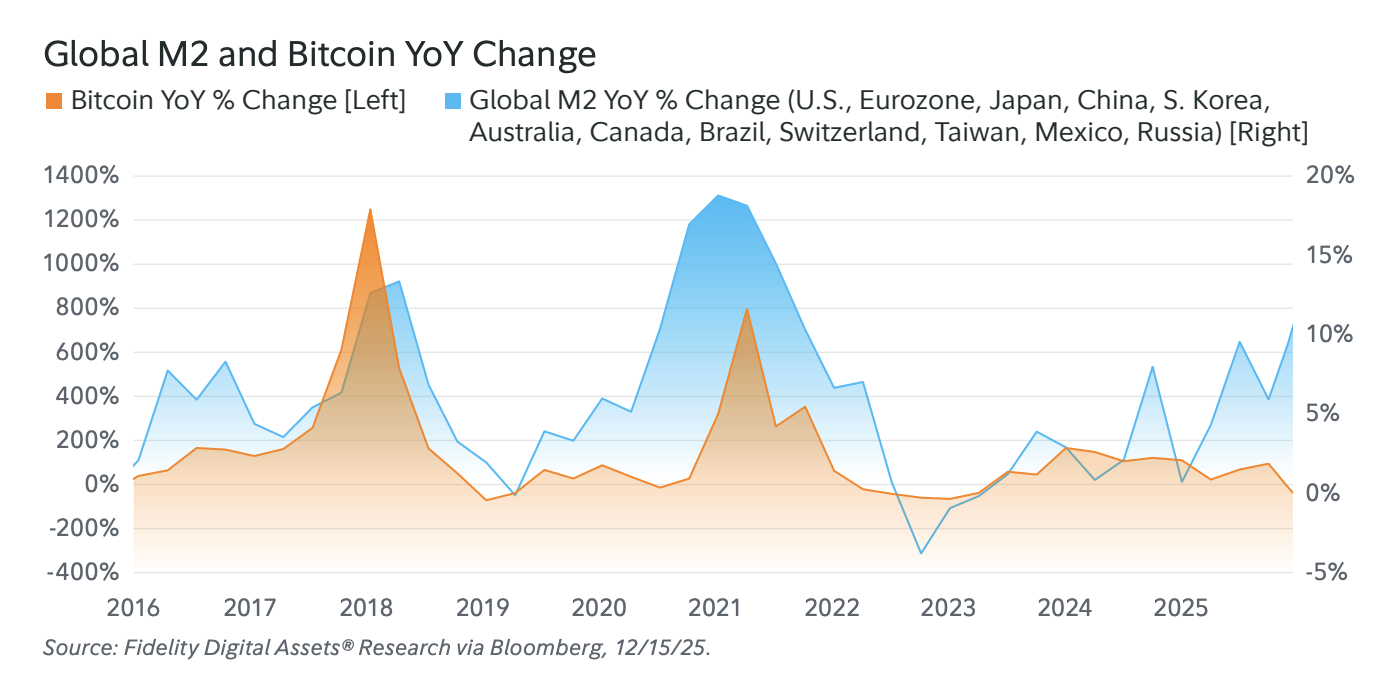 Global M2 and Bitcoin year-over-year percentage change. Source: Fidelity
In 2025, gold rebounded 65% while Bitcoin remained rather stagnant. However, Hougan predicts Bitcoin will surpass gold’s performance in 2026.
Yet, as Hougan notes, Bitcoin and gold usually exhibit only a mild positive correlation, which can be beneficial for portfolio risk-adjusted returns.
Analyst Tuur Demeester echoed that the accelerated money supply growth supports Bitcoin’s bullish outlook for 2026.
Repeating Patterns from Past Bull Cycles
A 56% rally could position Bitcoin’s price between $144,000 and $150,000. The current price action is reminiscent of previous bull cycles, suggesting Bitcoin may continue this bullish trajectory as it moves from accumulation to a phase that precedes more substantial price increases.
For further details on Bitcoin’s potential breakout, readers are encouraged to conduct their own research.