


Blockchain analytics firm Chainalysis has introduced a new automation feature designed to enhance access to onchain investigation and compliance tools for non-technical users.
The new feature, named Workflows, enables compliance and investigative teams to perform predefined blockchain analyses without needing to write code, thereby decreasing dependence on custom SQL or Python queries.
Chainalysis stated that this tool aims to standardize common investigative workflows using prebuilt templates, making it easier to replicate across various cases as they adapt their data products for a broader user base.
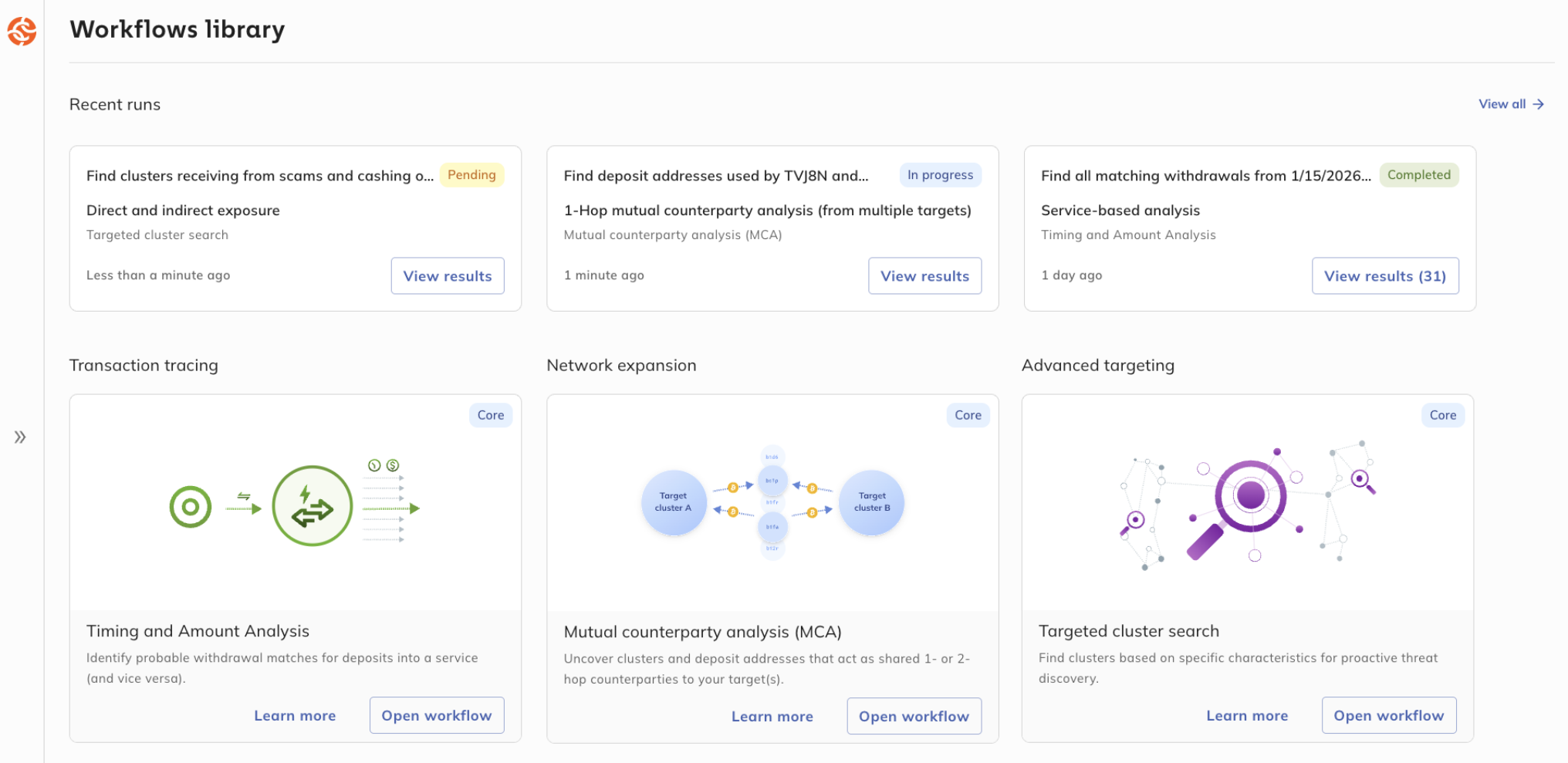 Chainalysis’s Workflows Library.
Source: Chainalysis
Chainalysis’s Workflows Library.
Source: Chainalysis
“What previously required technical expertise and lots of time, can now be done by any user in minutes,” stated Ekim Buyuk, senior product manager at Chainalysis. “Instead of asking users to understand data schemas, it queries investigation-level questions such as which actors, wallets, or time frames matter.”
Buyuk added that fraud and scam networks are quick to adopt new technologies to enhance their operations, citing Chainalysis research that revealed AI-enabled scams extract 4.5 times more money from victims. This trend illustrates the challenges investigators and compliance teams are increasingly tasked with monitoring.
One notable challenge in investigating scams is that the amounts stolen from individual victims may seem minor on a relative scale, yet blockchain analysis can reveal fraud networks encompassing hundreds or thousands of victims, reaching into billions of dollars.
Overview of Crypto Scams and Fraud in 2025
A recent report from Chainalysis estimates that crypto scams and fraud resulted in losses of around $17 billion in 2025, driven largely by a surge in impersonation schemes and the growing industrialization of fraud operations utilizing AI, deepfakes, and sophisticated money laundering networks.
In early January, attackers targeted hundreds of wallets across Ethereum Virtual Machine-compatible networks, with what onchain investigator ZachXBT described as a broad, low-value exploit tied to the Ledger hack.
Moreover, social engineering attacks persisted, exemplified by ZachXBT’s identification of a suspected scammer who impersonated Coinbase customer support, leading to the theft of approximately $2 million in 2025.
In conclusion, while blockchain security company PeckShield reports a significant decrease in overall crypto hacking losses, the robust growth of scams remains a noteworthy concern.