
Bitcoin Nodes Embrace BIP-110 Amid Spam Concerns
The implementation of BIP-110 aims to reduce spam in non-monetary Bitcoin transactions.


The Bitcoin network has seen a rise in nodes supporting the Bitcoin Improvement Proposal 110 (BIP-110), which aims to limit data included in transactions to combat spam originating from non-monetary exchanges. As of now, 583 out of 24,481 nodes are facilitating this proposal, primarily through the Bitcoin Knots software.
BIP-110 restricts transaction outputs to 34 bytes and limits the OP_RETURN data inclusion to 83 bytes. This temporary implementation is set to last one year but may be extended or adjusted as outlined in the proposal’s GitHub documentation.
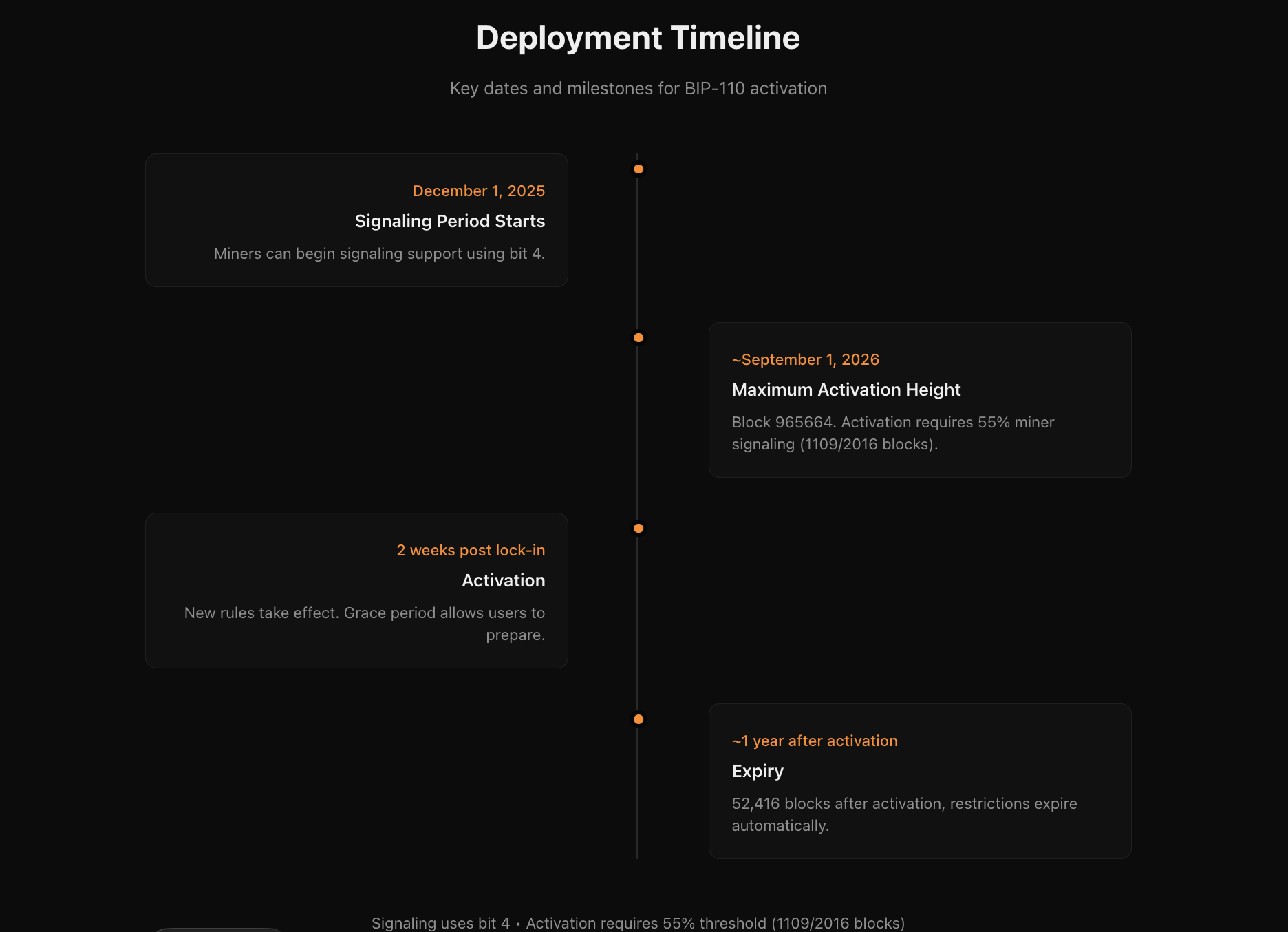 BIP-110 Deployment Timeline
Image Source: BIP-110.org
BIP-110 Deployment Timeline
Image Source: BIP-110.org
The OP_RETURN script enables users to add arbitrary data, which has sparked considerable debate among the Bitcoin community, particularly following the recent upgrades to Bitcoin Core. Critics argue that this allows excessive data inclusion, creating additional costs for node operators and jeopardizing the decentralization of the network, as these challenges push out smaller operators.
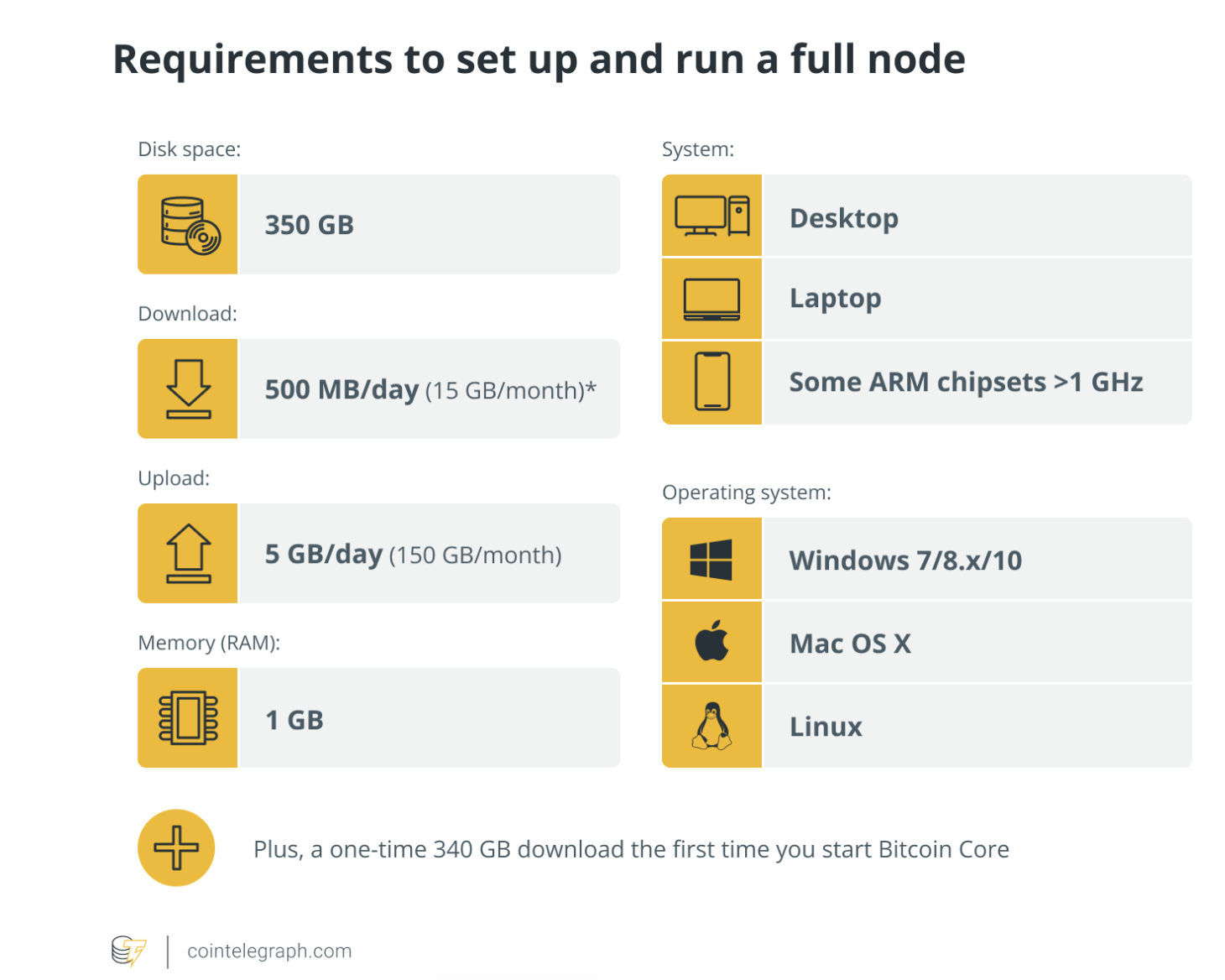 Bitcoin Node Hardware Requirements
Image Source: Cointelegraph
Bitcoin Node Hardware Requirements
Image Source: Cointelegraph
Matthew Kratter, a Bitcoin advocate, described the detrimental effects of such spam on the network:
“It’s like one of those parasitic plants, like ivy, completely covering a tree, eating up the tree, and then the inner scaffolding collapses, and the ivy collapses because it’s basically destroyed the structure. This is what spam has the potential to do to Bitcoin.”
In contrast, supporters of the uncapped OP_RETURN limit, such as Jameson Lopp, argue that filters do not effectively mitigate spam.
For further insights, you can explore the following related articles: