



The global non-fungible token (NFT) market capitalization has dipped below $1.5 billion, reverting to levels reminiscent of the pre-2021 boom.
The decline occurred during a broader downturn in the cryptocurrency market. As of January 23, the total cryptocurrency market cap was approximately $3.1 trillion but fell to $2.2 trillion by the following Friday.
Major cryptocurrencies such as Bitcoin (BTC) dropped from nearly $89,000 to around $65,000, while Ether (ETH) fell from $3,000 to about $1,800 within the same period. Both Bitcoin and Ethereum remain the primary networks for NFTs based on 30-day trading volume, according to NFT data aggregator CryptoSlam.
The decrease in NFT market cap follows notable exits and closures, showcasing ongoing contractions within the sector.
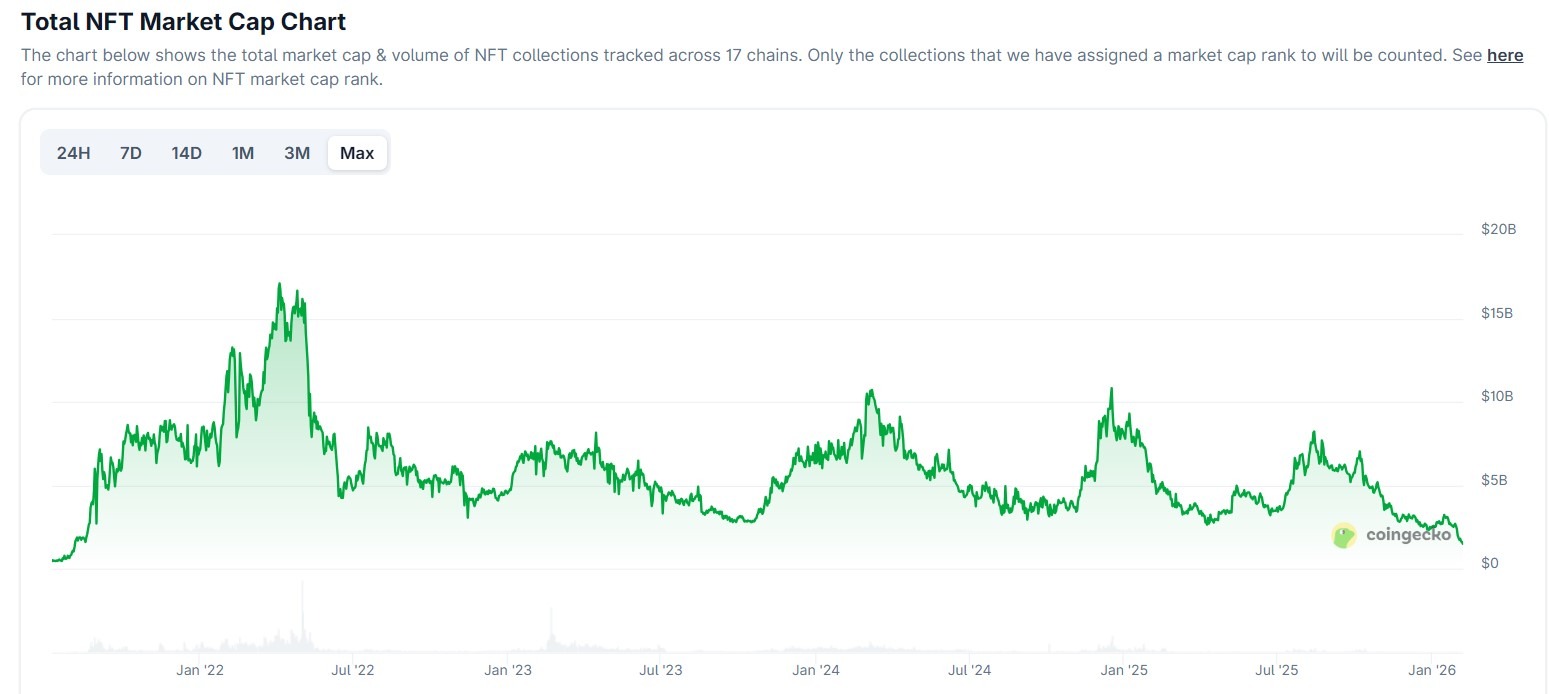 Total NFT market cap chart. Source: CoinGecko
Mismatch Between Supply and Demand
The reset in the market has been worsened by a growing disparity between NFT supply and the demand from buyers. Data from CryptoSlam indicates that the total NFT supply rose to nearly 1.3 billion in 2025, marking a 25% increase from 2024. Nevertheless, total NFT sales declined 37% year-on-year, lowering the average sale price to below $100.
This trend implies that although minting has become more affordable and issuance barriers have decreased, buyer engagement and spending have not kept pace.
Corporate Retreats and Platform Closures
The decline follows a pattern of significant retreats paralleling the market pullback. For example, on January 7, Nike quietly sold its digital collectibles studio RTFKT, which it had acquired during the NFT craze at significant expense—resulting from the firm’s decision to shutter operations amidst an investor lawsuit.
Furthermore, shutdowns of marketplaces have escalated. Nifty Gateway, one of the original NFT platforms, announced its closure set for February 23, transitioning to a withdrawal-only state. The company attributed its decision to a prolonged market downturn.
On January 28, Rodeo, a social NFT platform, revealed its intention to halt operations after struggling to achieve sustainable growth, with complete shut down scheduled for March.