



Key Takeaways:
- Bitcoin’s open interest has dropped to $34 billion, reflecting a possible waning of institutional interest.
- The U.S. job market’s weakness and Bitcoin options skew indicate a bearish trend, despite strength in stocks and gold.
Bitcoin’s price has struggled to hold above $72,000 over the past week, causing concerns over institutional demand fading. The total Bitcoin futures open interest has decreased significantly, its lowest mark since November 2024, intensifying fears of a retest around the $60,000 support level.
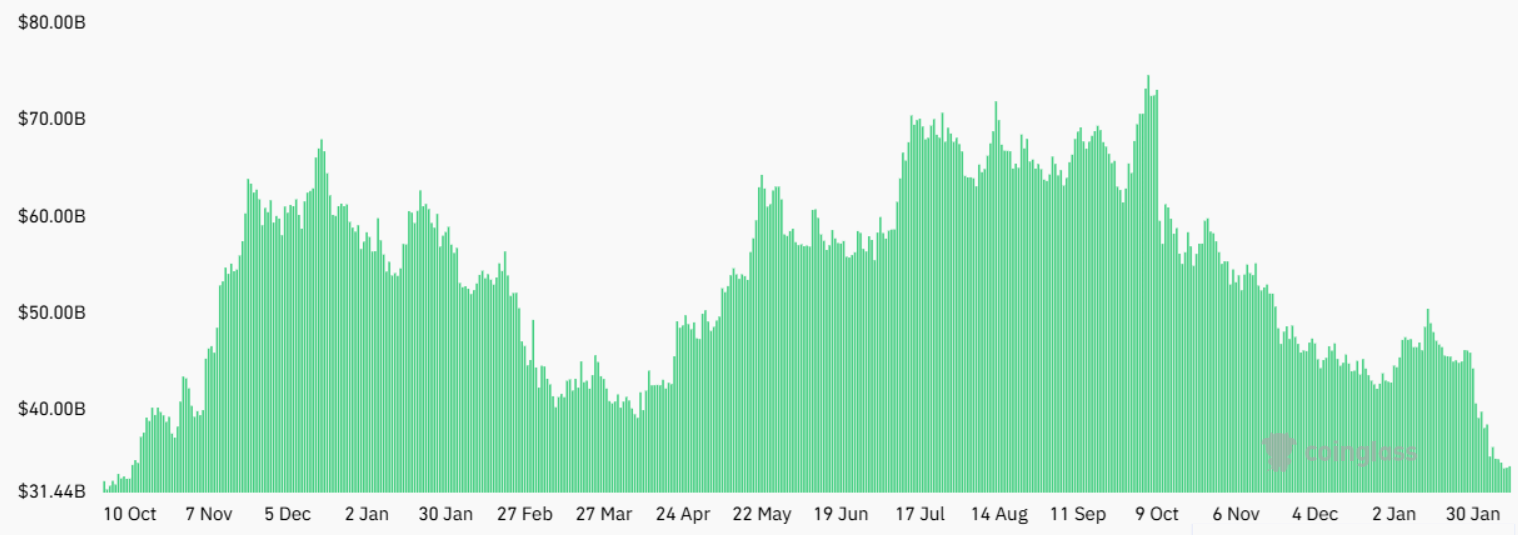 BTC futures aggregate open interest, USD. Source: CoinGlass
The open interest on Bitcoin futures fell by 28% from a month ago, concluding at $34 billion. Measurement in Bitcoin terms shows stability with BTC 502,450, indicating leverage demand has remained constant. This decrease partly stems from $5.2 billion in forced liquidations in the last two weeks.
Investors’ Concerns Amid Economic Data
Frustration mounts among investors due to unclear causes behind Bitcoin’s 28% decline over the past month, especially as gold has surged past $5,000 and the S&P 500 hovers near its all-time high. Analysts point to signs of weakness in the U.S. labor market as contributing factors.
According to recent data, the U.S. economy generated only 181,000 jobs in 2025, weaker than previous estimates. The White House downplays these concerns, suggesting that adjusted immigration policies have led to fewer jobs being needed.
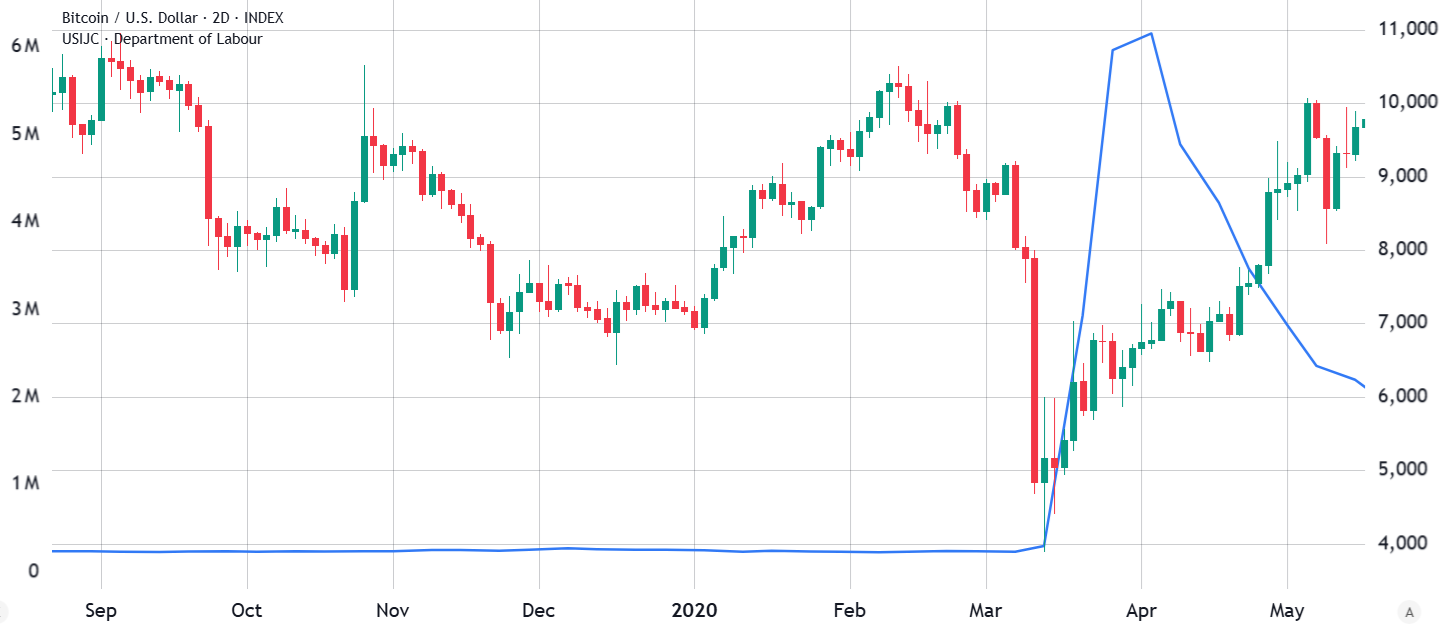 US weekly initial jobless claims vs. Bitcoin/USD
Notably, the 52% crash in Bitcoin price during March 2020 coincided with escalated fears over the COVID-19 pandemic, anticipated job losses, and economic decline. The current economic outlook could prompt the U.S. Federal Reserve to reduce interest rates more quickly, affecting capital costs and consumer financing, thus explaining the stock market resilience in 2026.
Despite the decoupling from traditional markets, the modest demand for bullish leveraged positions raises additional concerns.
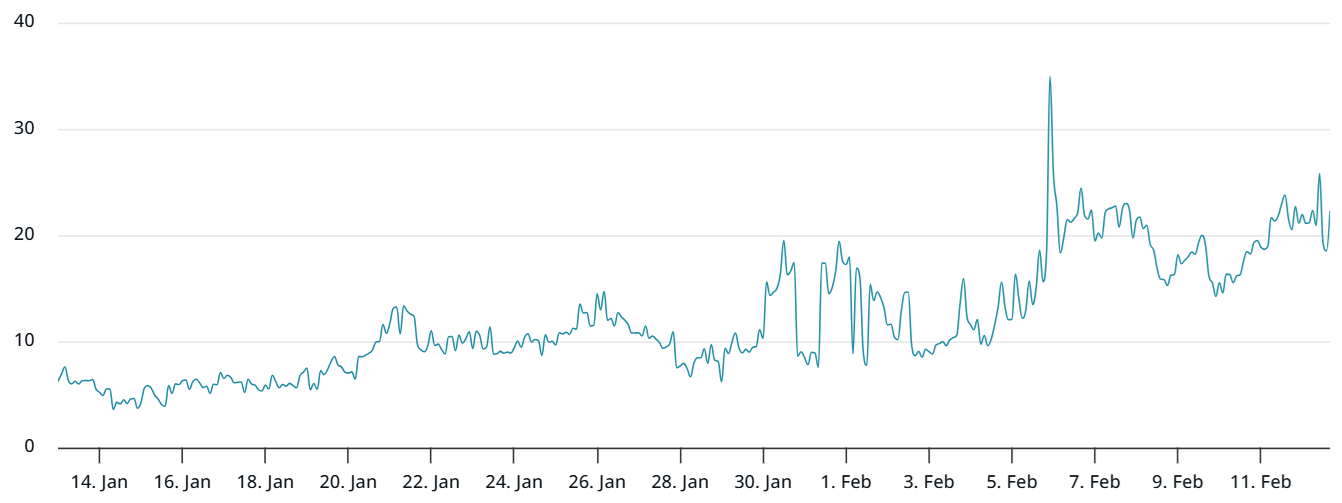 Bitcoin futures annualized funding rate
The sustained weakness in Bitcoin futures is shown through the annualized funding rate, which has lingered below the neutral 12% threshold recently. This reflects a prevailing bearish sentiment among professional traders, as they hesitate to take on downside risks.
Despite the struggling derivative metrics, average daily trading volumes for U.S.-listed Bitcoin ETFs reach $5.4 billion, contradicting views of declining institutional interest. Ultimately, Bitcoin’s advancement may hinge on improved insight into the U.S. job market.